Dive-LD
Large-displacement autonomous underwater vehicle for long-range subsea ISR and survey missions, rated to 6,000 m.
Sea droneby Anduril IndustriesIntroduced 2022 · Updated 2025

Photos: www.thedefensenews.com · gagadget.com · interestingengineering.com · Anduril Industries · www.taiwannews.com.tw
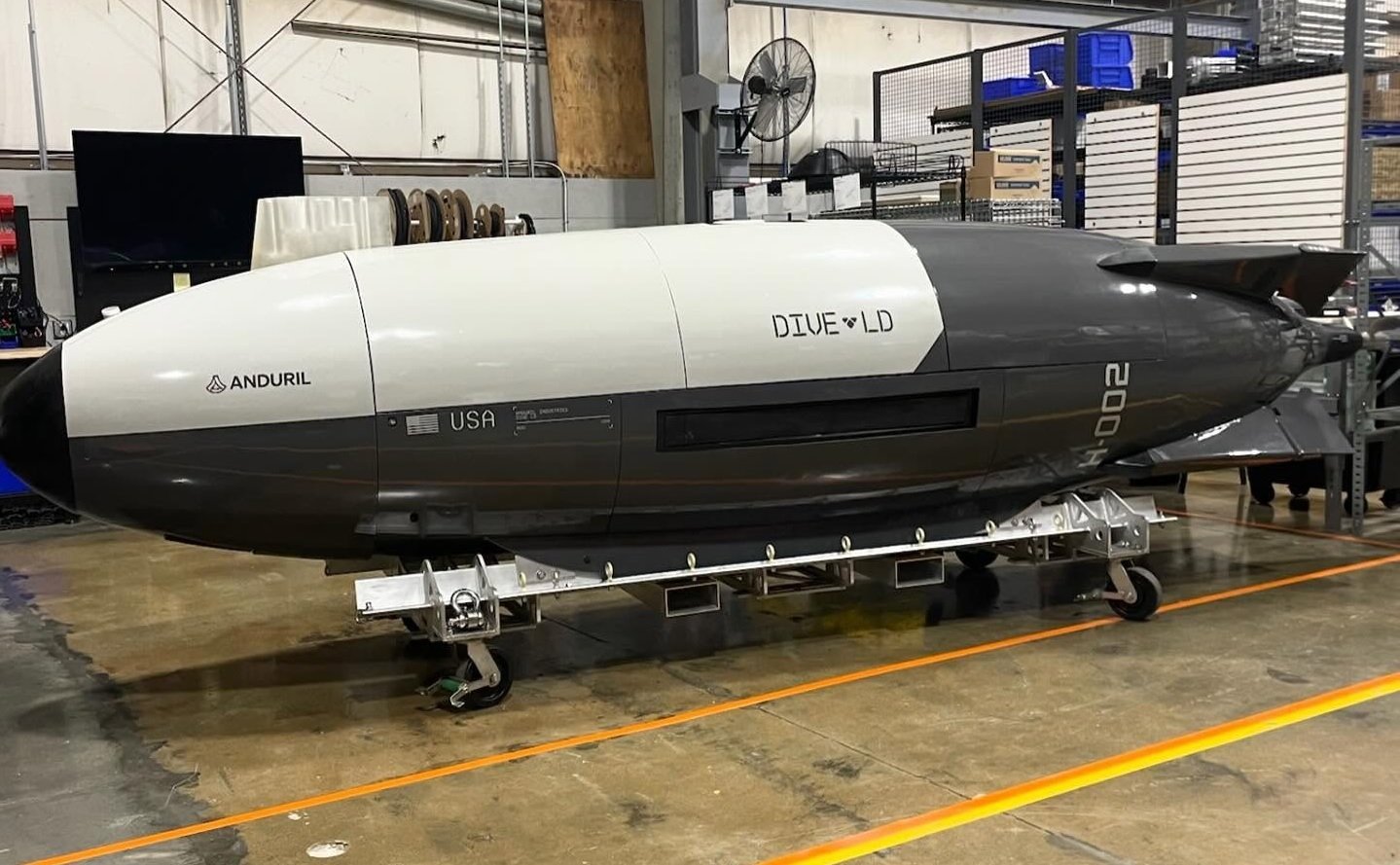
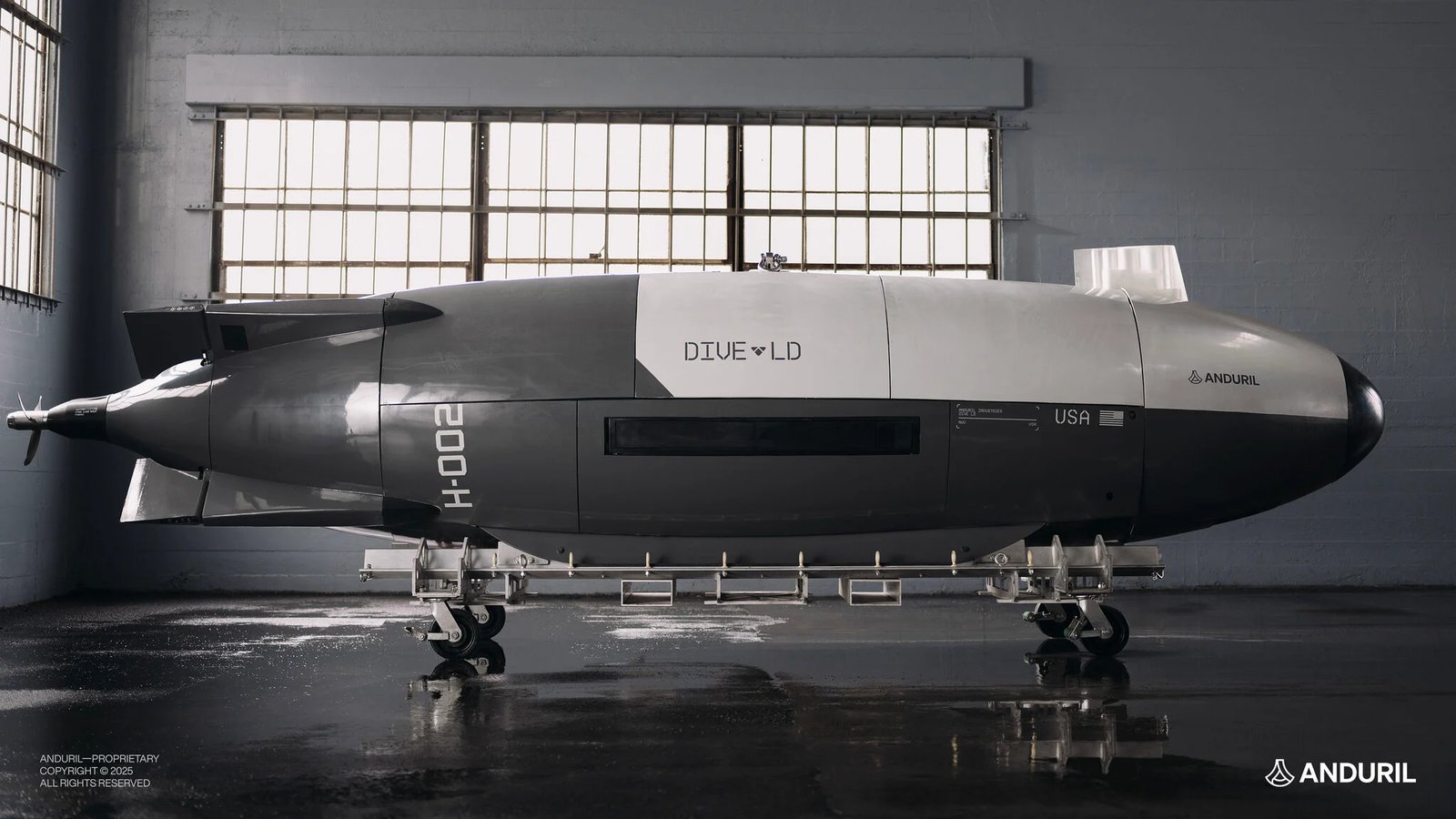
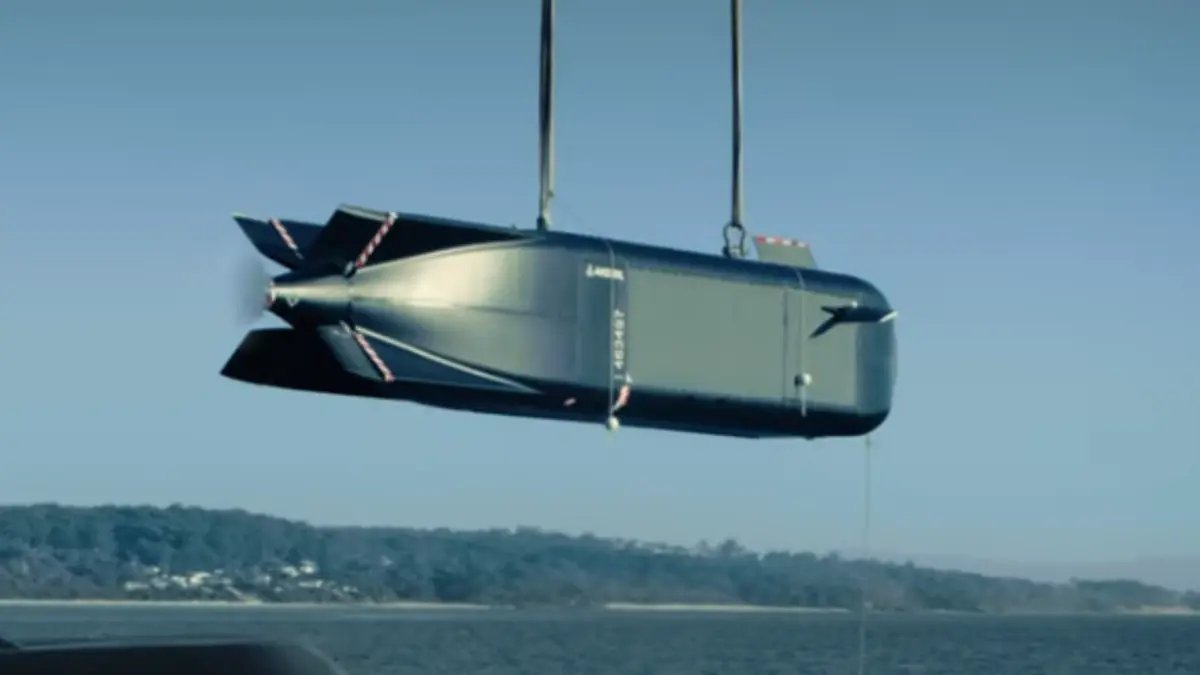
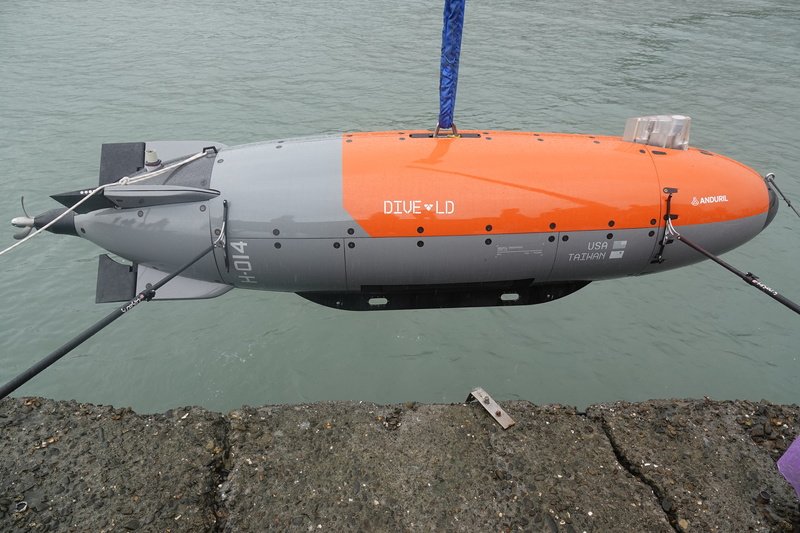
Dive-LD is a large-displacement unmanned underwater vehicle built by Anduril Industries, aimed at the long-endurance subsea reconnaissance and survey work that has historically required a crewed vessel and a ship-launched towed sensor. The platform entered Anduril’s catalogue in 2022 following the company’s acquisition of Dive Technologies, a Massachusetts-based AUV startup that had spent several years iterating the hull design for deep-water commercial survey customers. Anduril positions Dive-LD as the lower-cost, deeper-diving complement to the better-known Extra-Large UUV class, with the United States and Australia named among its early operators.
The vehicle is built around a modular, 3D-printed hull with a payload bay that customers can reconfigure between missions, a deliberate break from the welded pressure hulls common in the AUV world. Endurance sits around ten days at survey speed, and the depth rating of 6,000 metres puts the system in genuine deep-ocean territory — well past the continental shelf and into the abyssal plain where most submarine cables and a growing share of strategic seabed infrastructure live. Onboard autonomy handles navigation, obstacle avoidance, and mission replanning without an acoustic tether back to a surface ship, drawing on the same Lattice software stack Anduril runs across its air and ground systems. Standard payload fits include side-scan and synthetic-aperture sonar, sub-bottom profilers, and magnetometers, and the open bay is explicitly pitched at customers who want to integrate their own sensors or, in the defence case, classified payloads.
Operationally, the platform underpins the Royal Australian Navy’s Ghost Shark programme — the effort that pairs Anduril Australia with the Defence Science and Technology Group on an extra-large autonomous undersea vehicle. The United States Navy procured Dive-LD under the Pentagon’s Replicator initiative, taking delivery of its first vehicle into Unmanned Undersea Vehicle Squadron One in April 2025, with serial production standing up at Quonset Point, Rhode Island. The system has also been picked up by civilian survey operators for hydrographic and pipeline-inspection contracts, which gives the programme a dual-use revenue base that pure-defence AUVs typically lack.
Development has continued in parallel with the Ghost Shark line, with Anduril framing Dive-LD as a building block rather than a finished product — the hull and autonomy stack are reused, and mission-specific variants are built on top. That pattern places it in the same competitive space as Boeing’s Echo Voyager and HII’s REMUS family, but at a smaller and cheaper point on the curve, and aimed squarely at customers who want to field meaningful numbers of long-endurance underwater drones rather than a handful of bespoke vehicles.
Sources
- www.anduril.com/hardware/dive-ld/ (2026-06-22) — Official Dive-LD page — ~19 ft / 5.8 m hull, 6,000 m depth rating, ~10-day endurance, modular payload bay.
- www.armyrecognition.com/news/navy-news/2025/anduril-delivers-first-dive-ld-autonomous-underwater-vehicle-to-us-navy (2026-06-22) — Army Recognition on the April 2025 delivery to UUVRON-1, Replicator selection and Quonset Point production.
- www.defensedaily.com/anduril-expands-into-autonomous-maritime-systems-with-acquisition-of-dive-technologies/ (2026-06-22) — Defense Daily on Anduril's February 2022 acquisition of Dive Technologies.
- aparobot.com/robots/dive-ld (2026-06-22) — Detailed spec sheet — length, diameter, weight, 2-8 kn speed, direct-drive electric propulsion and sensor fits.