Products Uralvagonzavod
D-30SN
systemby Uralvagonzavod


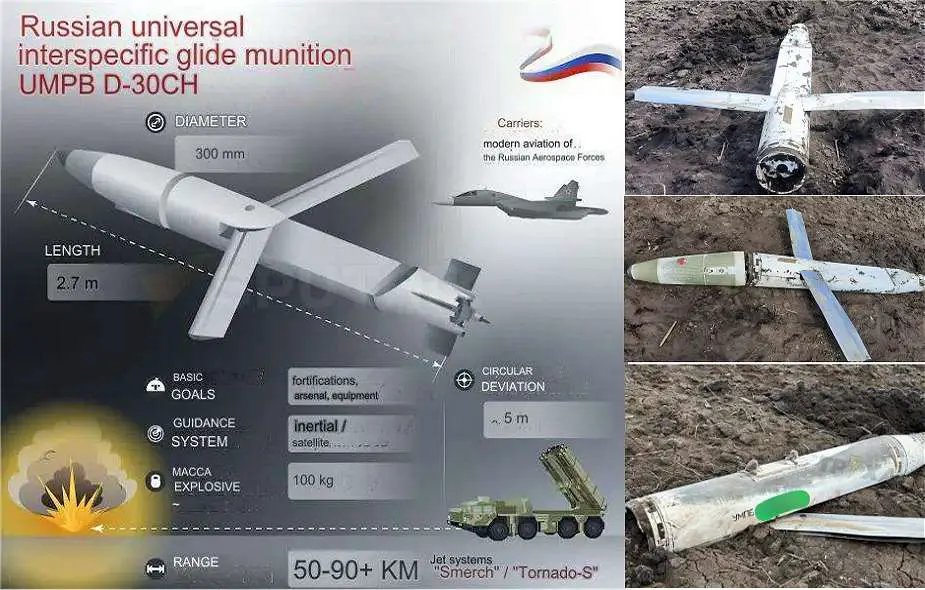

Photos: Агентство. Новости (Agentstvo) (Telegram) · www.armyrecognition.com · Boris Rozhin (Colonel Cassad) (Telegram)
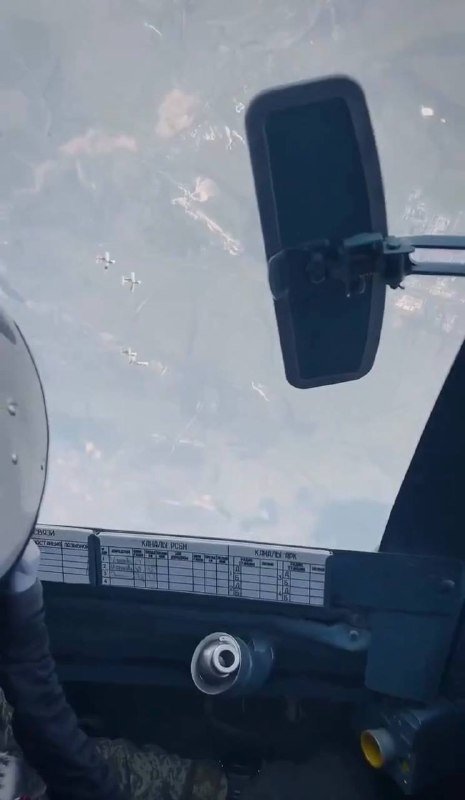
The UMPB D-30SN is a Russian precision-guided glide bomb first seen in public in March 2024, when a Ukrainian Telegram channel shared photographs of wreckage from a previously unknown munition recovered on Ukrainian territory. A Russian channel close to the Russian Air Force then identified it, saying the designation stood for “Universal Interspecific Glide Munition” and that the bomb was still in testing. It has since been fielded against Ukrainian positions and infrastructure, dropped by Su-34 strike fighters and, by Ukrainian accounts, carried by the S-70 Okhotnik stealth drone that was shot down over Kostiantynivka in October 2024.
Unlike the UMPK — the pop-out wing kit Russia bolts onto its stockpile of dumb bombs — the UMPB is a purpose-built weapon, roughly in the class of the US GBU-39/B Small Diameter Bomb. Open-source analysis published by the FDD’s Long War Journal in June 2024, drawn from photos circulated on Russian and Ukrainian Telegram channels, puts the diameter at 30 cm and the warhead at over 100 kilograms; a Ukrainian official later said a May 2024 strike delivered “about 100 kilograms of explosives.” Guidance is inertial plus satellite, with the satellite feed stabilised by a Kometa controlled-reception-pattern antenna. Ukrainian channels say the munition carries the newer eight-antenna Kometa, the same jam-resistant variant Russia has been fitting to UMPK kits. Russian commentary indicates jet propulsion rather than pure gliding, which would help account for the ranges cited — 90 kilometres per Defense Express, extending to 120 kilometres on reports of a Su-34HBO configuration published by Bulgarian Military in September 2024.
Operationally the UMPB fits into Russia’s broader move to standoff bombardment, after its tactical aviation all but ceased penetration sorties in April 2022 and turned to glide weapons released from beyond the reach of most Ukrainian air defences. Russian strike aviation is now reported to drop over a hundred glide bombs a day across the front, a pattern that helped Moscow take Avdiivka in February 2024. The UMPB sits inside that campaign rather than driving it; independent analysts have not corroborated large-scale deployment figures specific to this munition.
Development is still active. Its appearance under the wing of the S-70 Okhotnik indicates Russia is pairing the bomb with its stealth-drone programme, and the longer-range Su-34 configuration reported in September 2024 suggests continued tuning rather than a frozen design. In the Russian inventory the UMPB occupies the gap between the mass-produced UMPK glide kits and the scarcer, costlier air-launched cruise missiles — cheaper and more plentiful than the latter, more capable than the former.