Besomar 3210-TN
High-speed fixed-wing interceptor with thermal camera and EW-resistant comms, designed to destroy Shahed, Geran, Orlan and ZALA drones at night or in fog.
Droneby BesomarIntroduced 2025

Photos: www.droneblog.news · united24media.com · bavovna.ai · Besomar
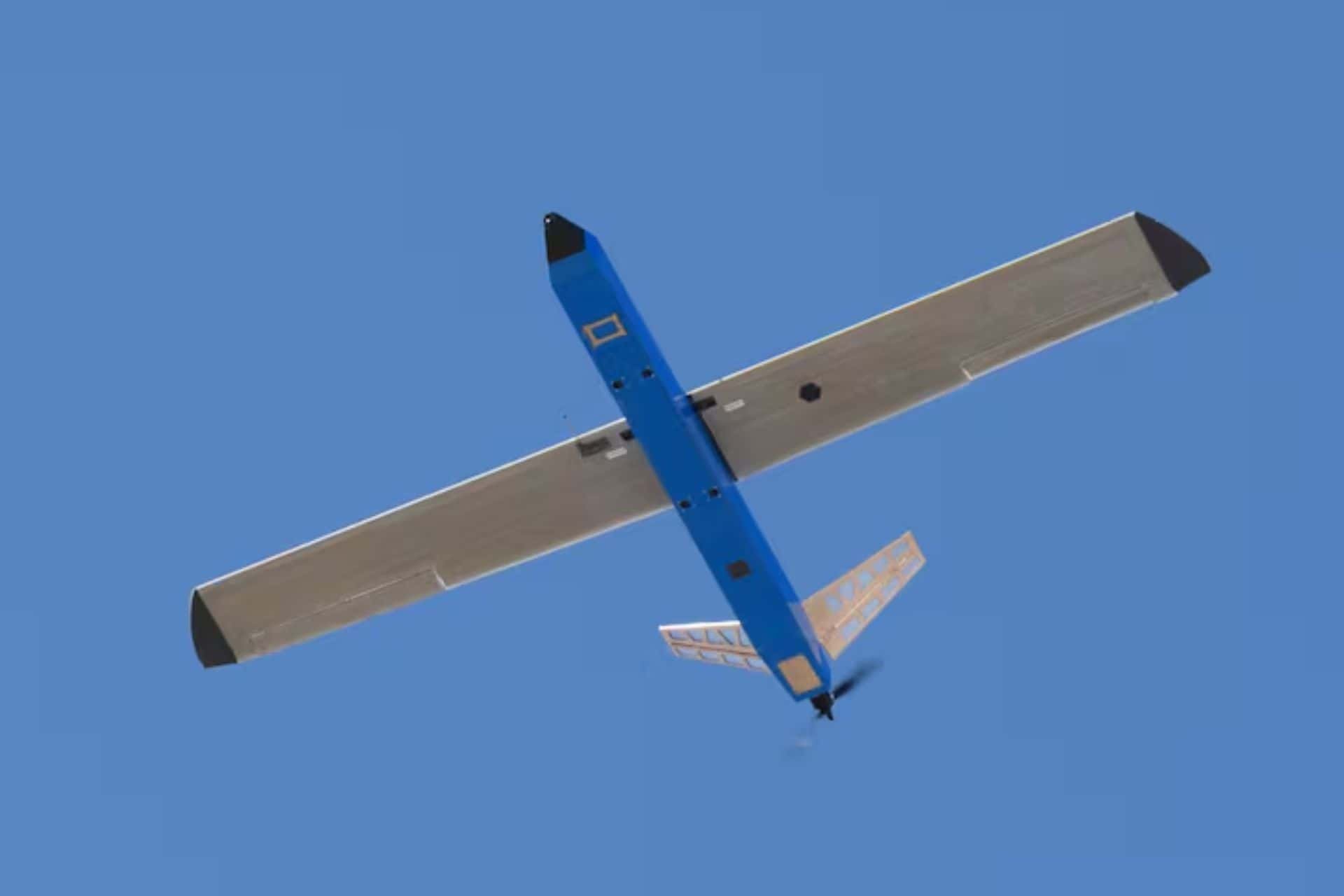
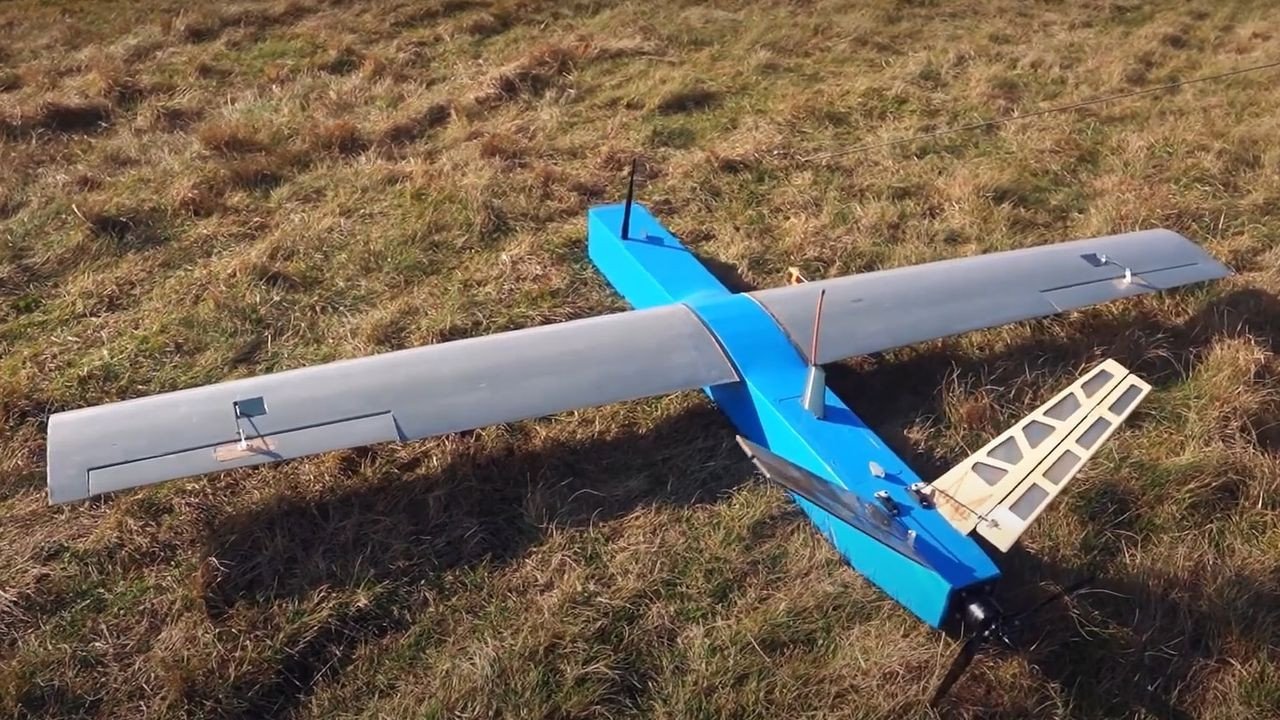
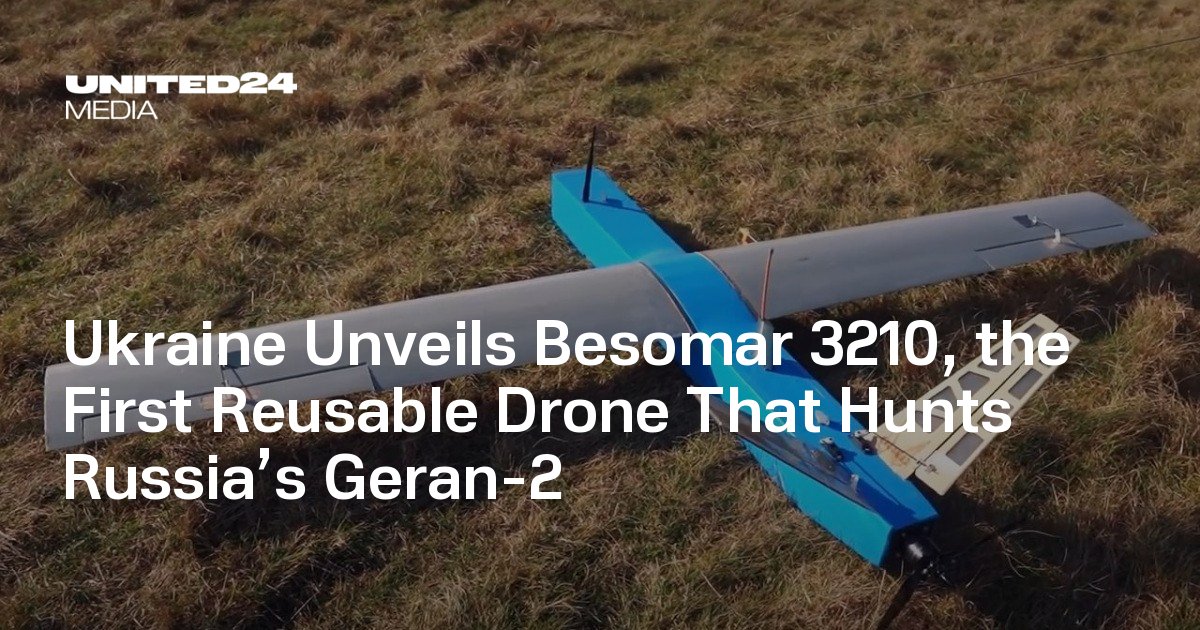
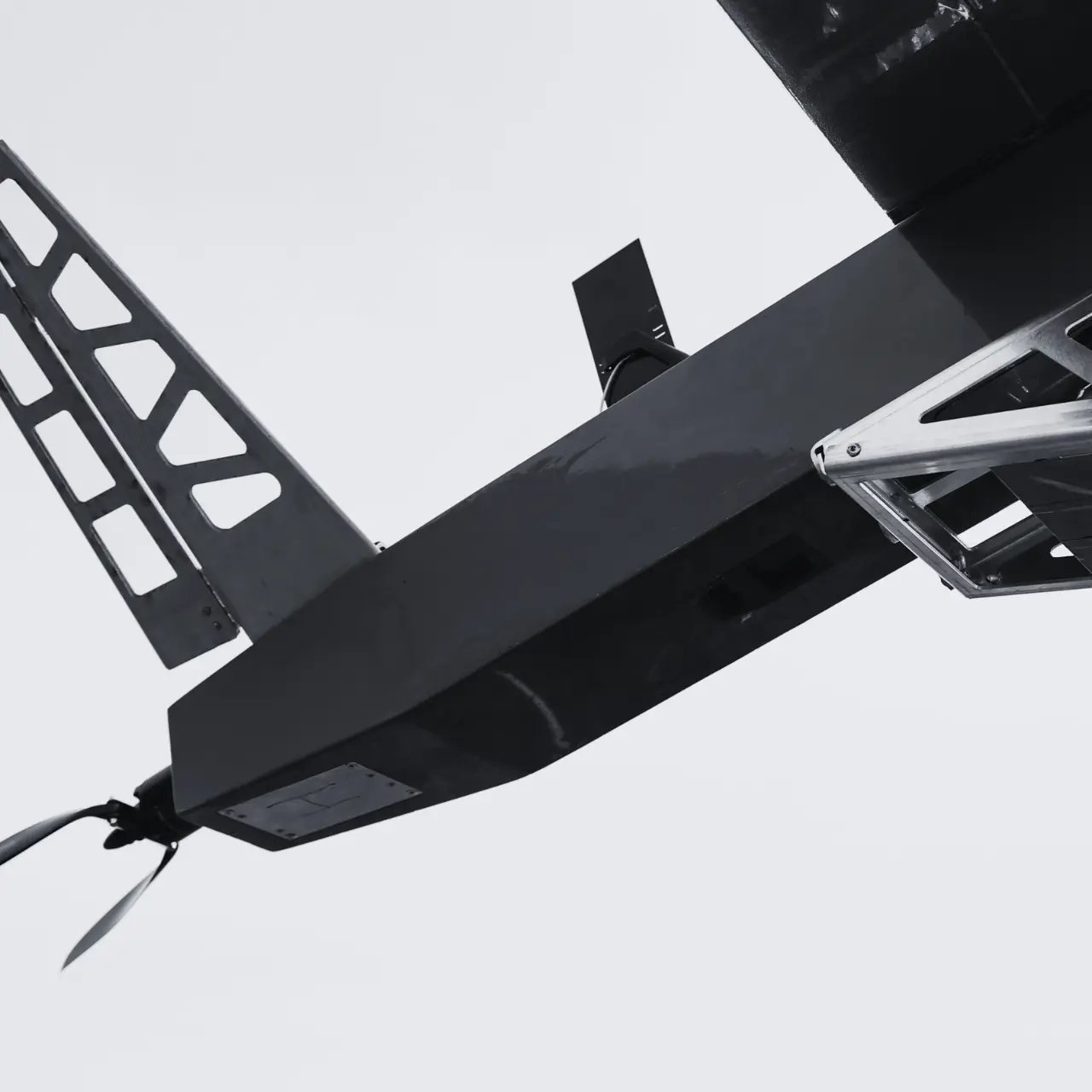
Besomar 3210-TN is a fixed-wing interceptor drone built by the Ukrainian manufacturer Besomar and introduced in 2025 as the thermal-imaging member of its 3210-series air-defence UAVs. It is designed for a single job: chasing down and destroying long-range one-way attack drones and Russian battlefield reconnaissance platforms — the Iranian-designed Shahed-136 and its Russian-built Geran-2 twin, together with Orlan-10 and ZALA reconnaissance UAVs — in exactly the conditions where ground-based optical spotters and short-range gun systems tend to lose their targets: darkness, fog and low cloud.
According to figures published by the manufacturer, the airframe tops 260 km/h, ranges out to 60 kilometres from its launcher, stays airborne for around twenty minutes, and can climb to 5,500 metres carrying a one-kilogram payload. Launch is by catapult and recovery is described as a one-click landing procedure, both consistent with the small-team, rapidly-relocatable posture that Ukrainian air-defence units have adopted against nightly Shahed waves. The “TN” suffix marks the addition of a thermal camera, which lets the interceptor acquire the heat signature of a Shahed’s engine plume in the dark — the very envelope in which most Russian one-way attack drone raids are launched. Besomar states that the command datalink is engineered to resist Russian electronic-warfare jamming, though the vendor has not published independent test data and no third-party teardown of the onboard compute, seeker or radio has yet appeared in open sources.
Ukraine is the only named operator, and given the system’s tight optimisation against the Shahed/Geran threat that is likely to remain the case while the war continues. Public reporting on Ukrainian interceptor-drone programmes has expanded sharply through 2025 as Kyiv and its Western backers have searched for a workable cost-per-kill answer to Russian long-range strike raids that now regularly exceed two hundred airframes in a single night. A short-range fixed-wing interceptor built at commercial-drone economics against a target that costs Russia into six figures per airframe is the arithmetic driving the whole category.
The parent variant in the line, the 3210-N, carries a shotgun payload for close-in kinetic kills; the 3210-TN reads as its night-capable sibling, adding thermal acquisition to the same reusable airframe. Combat use is asserted by the manufacturer, but publicly available engagement footage and Ukrainian General Staff acknowledgement of specific intercepts remain limited. The system enters a crowded Ukrainian procurement field alongside the Sting quadcopter interceptor and a growing set of foreign-supplied counter-drone platforms, all competing to industrialise a defence that has to scale as fast as the threat.