Bars
systemAdversary capabilityby KRET
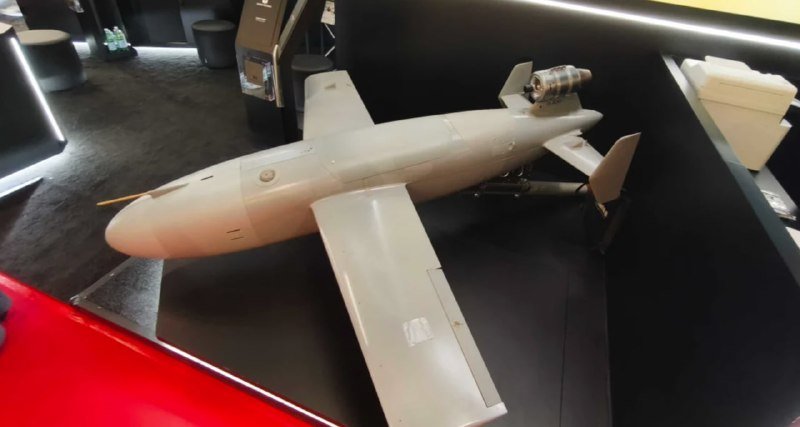
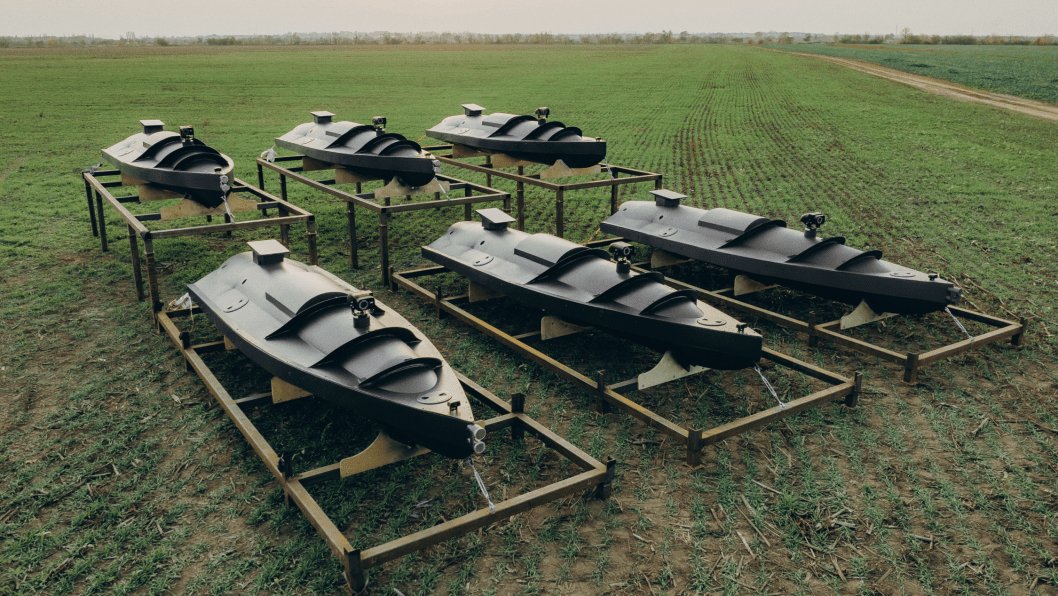
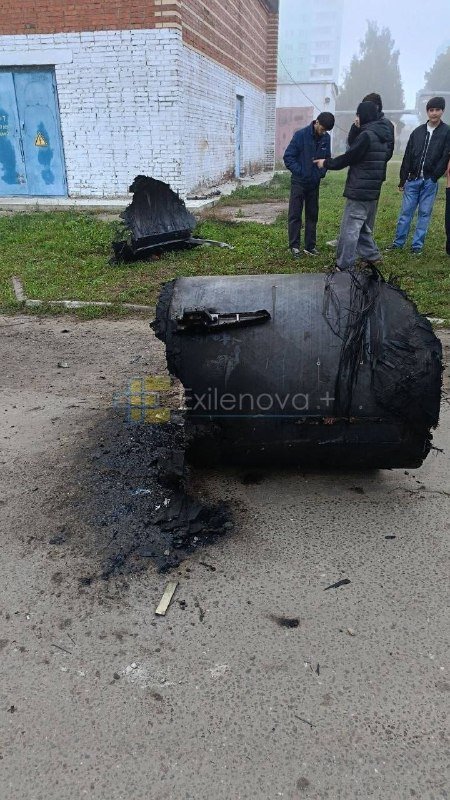
Photos: Беспилотники (дроны, БПЛА, UAV) (Telegram) · united24media.com · Служба безпеки України (Telegram) · www.armyrecognition.com · Агентство. Новости (Agentstvo) (Telegram)
Bars is a jet-powered long-range strike platform developed since 2023 by an undisclosed Ukrainian private company, publicly disclosed in April 2025 by then-Minister for Strategic Industries Herman Smetanin. The system has been used in deep-strike missions against Russian military and energy targets, including large-scale attacks on the Moscow Oil Refinery in May and June 2026 and on the Novokuybyshevsk refinery in Samara Oblast in November 2025. The manufacturer’s identity remains withheld for operational security reasons.
The airframe is a composite construction with a biplane tail and a miniature turbojet mounted externally above the fuselage — a configuration seen on other low-cost cruise missiles that lets the engine be sourced from whichever vendor is available. Launch is from a ground rail with a solid-fuel rocket-assisted take-off motor that provides the brief impulse the turbojet needs to ignite. The developer told RBC-Ukraine that localisation stands above 74%; turbojets remain the main imported component, with limited lead times from a small number of European suppliers identified by Defense Express as the chief constraint on scaling production. Fragments recovered from launches have identified Chinese ZofiTech ZT-J40 turbojets among the engines in use, according to Ukrainian analysts at Victory Drones. During the terminal phase the operator may fly the system manually over a live datalink or hand control to an onboard optical and machine-vision guidance system; the developer said AI is applied “at all levels, from development and solving engineering problems to implementing machine vision in our target-acquisition systems.”
The Bars is a modular family across three mission profiles — DeepStrike, MiddleStrike and FrontStrike — trading fuel capacity against warhead weight. The baseline model carries a 22 kg warhead to around 700 km; an upgraded configuration reportedly reaches more than 1,000 km with a 60 kg warhead and speeds above 700 km/h. The Bars RS displayed at Eurosatory 2026 has a 95-litre fuel tank and a 135 kg maximum take-off weight, and the manufacturer has described a heavier variant with up to 220 kg MTOW and a 105 kg warhead option. Roughly 7,000 launches had been accumulated across testing and combat use by mid-2026, according to the company.
Production is reported by the manufacturer to have reached roughly 2,000 units per month by September 2026, with more than 200 deep-strike missions recorded — figures that come from the developer and have not been independently verified. Germany signed an implementation agreement in July 2026 under its Build with Ukraine initiative to co-produce the Bars, with Berlin funding the first phase and all output delivered to Ukraine’s Defence Forces. A joint production line in Germany began operations in September 2026, with first units expected in Ukrainian hands from October; defence-industry reporting points to Diehl Defence as the likely German partner. Berlin committed roughly €400 million in May 2025 toward Bars, Liutyi and Flamingo interceptor drones.
In October 2026 President Volodymyr Zelensky disclosed that a variant of the Bars had been adapted as an air-defence interceptor against Russia’s jet-powered Shahed derivatives, with Defence Minister Yevhenii Khmara reporting an initial interception rate of around 30% and one unit achieving a five-for-five engagement in combat.
Sources (39)
- militarnyi.com/en/news/the-largest-strike-on-moscow-oil-refinery/
- militarnyi.com/en/news/bars-jet-powered-drones-ukraine-hits-russian-rubikon-refi …
- en.defence-ua.com/weapon_and_tech/ukraine_produces_more_than_2000_bars_per_month …
- en.defence-ua.com/weapon_and_tech/new_details_emerge_on_ukraines_bars_rs_missile …
- thedefender.media/en/2026/09/bars-new-specs/
- militarnyi.com/en/news/welt-germany-to-support-production-of-ukrainian-drones-ba …
- en.defence-ua.com/weapon_and_tech/germany_to_co_produce_ukraines_bars_missile_dr …
- dronexl.co/2026/10/04/germany-merz-kyiv-interceptor-drones-30-percent/
- united24media.com/war-in-ukraine/ukraine-may-have-turned-700-kmh-bars-strike-dro …
- united24media.com/latest-news/rocket-boosted-and-jet-powered-inside-ukraines-mys …
- thedefender.media/en/2026/09/bars-production/
- quwa.org/europe/defence-news-eu/germany-to-co-produce-ukraines-bars-missile-dron …
- newsukraine.rbc.ua/news/ukraine-s-developer-reveals-specs-of-bars-1788774961.htm …
- militarnyi.com/en/news/range-1000-km-payload-60-kg-bars-jet-drone/
- en.defence-ua.com/news/ukraine_will_have_more_bars_missile_drones_with_a_1000_km …
- united24media.com/war-in-ukraine/ukraine-tests-new-bars-interceptors-against-rus …
- www.pravda.com.ua/eng/news/2026/10/11/8057503/
- www.pravda.com.ua/eng/news/2026/07/08/8043024/
- en.defence-ua.com/news/bars_missile_drone_struck_moscow_first_now_adapted_to_sho …
- www.ukrinform.net/rubric-ato/4173323-ukraine-already-has-interceptor-drones-for- …
- newsukraine.rbc.ua/news/zelenskyy-reveals-progress-on-interceptor-1791119228.htm …
- militarnyi.com/en/news/jet-powered-interceptor-likely-developed-based-on-bars-mi …
- cpd.gov.ua/en/international-threats-en/europe/key-takeaways-from-the-meeting-bet …
- Telegram channel, Russian side:t.me/wargonzo/37744
- Telegram channel, Russian side:t.me/wargonzo/37690
- Telegram channel, Russian side:t.me/wargonzo/37498
- Telegram channel, Russian side:t.me/swodki/624937
- Telegram channel, Russian side:t.me/FPV_vyZOV/5730
- Telegram channel, Russian side:t.me/boris_rozhin/229229
- Telegram channel, Russian side:t.me/boris_rozhin/228987
- Telegram channel, Russian side:t.me/antifalivland/20395
- Telegram channel, Russian side:t.me/anna_news/95136
- militarnyi.com/en/news/ukraine-develops-new-bars-drone-missile-with-800-km-range …
- kyivindependent.com/ukraine-strikes-rosneft-oil-refinery-in-samara-oblast-and-dr …
- www.janes.com/defence-intelligence-insights/defence-news/air/eurosatory-2026-ukr …
- /osint-hetzner/2026-09-26--ukraine-strikes-refineries-and-azov-plant-with-drones …
- /osint-hetzner/2026-09-23--russian-bars-drones-use-chinese-zt-j40-turbojets/
- /osint-hetzner/2026-09-20--ukraine-strikes-moscow-refineries-and-warehouses-with …
- calisthenics-parks.com/spots/9010-en-public-pull-up-bars-pak-kret-outdoor-fitnes …