AH-64 Apache
Twin-engine attack helicopter and the backbone of US Army rotary-wing close air support.
Aircraftby BoeingIntroduced 1986
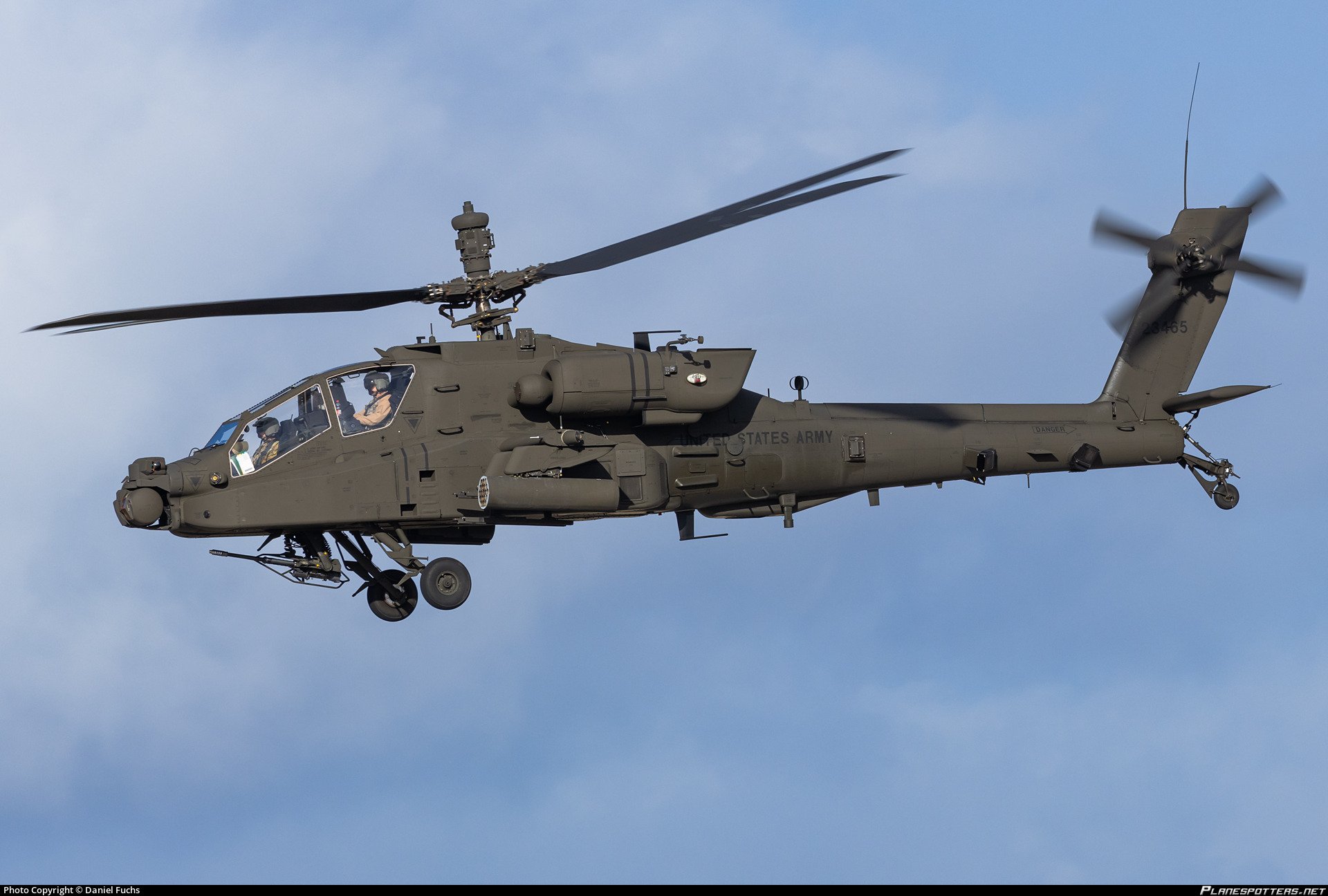
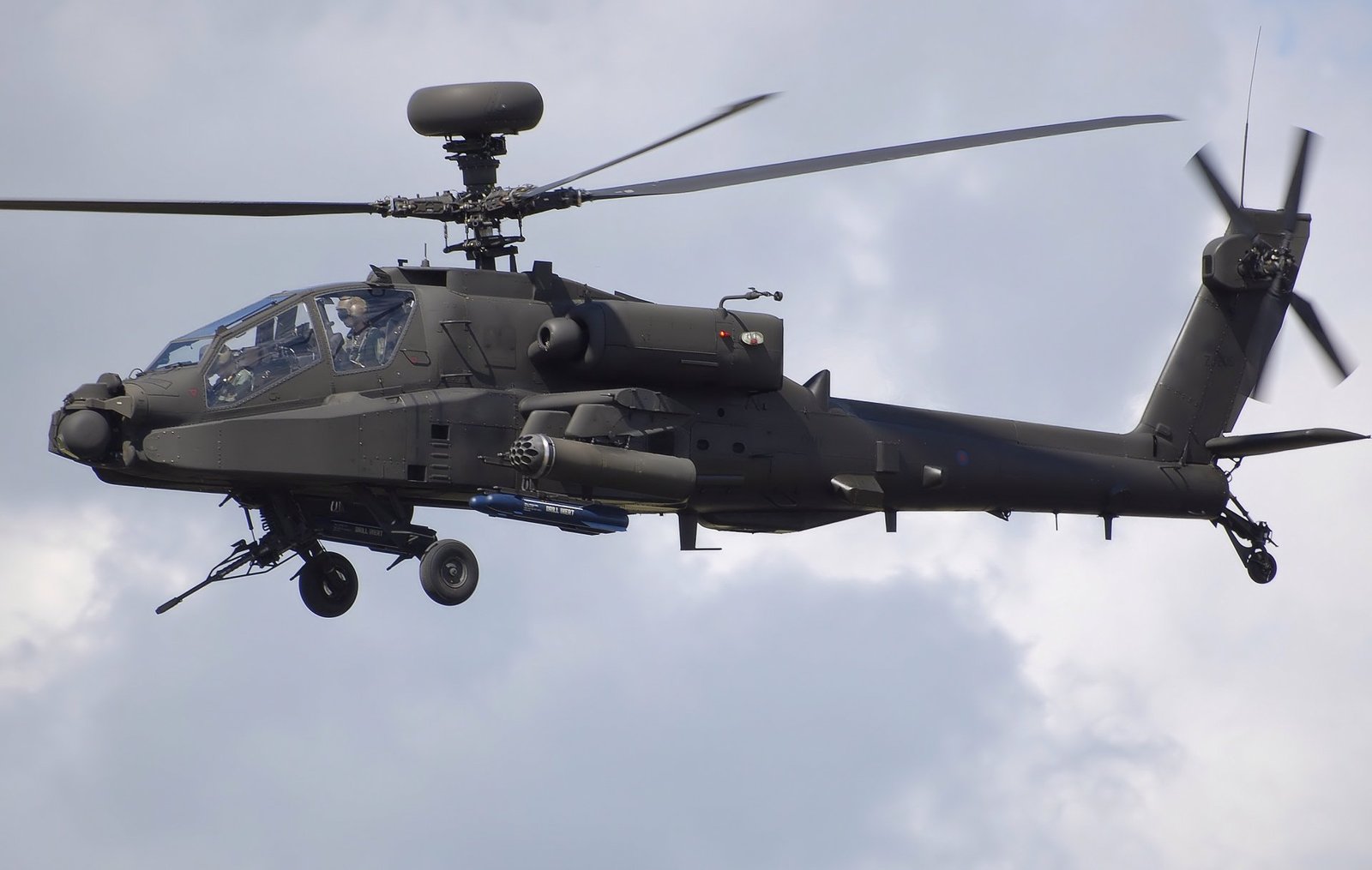
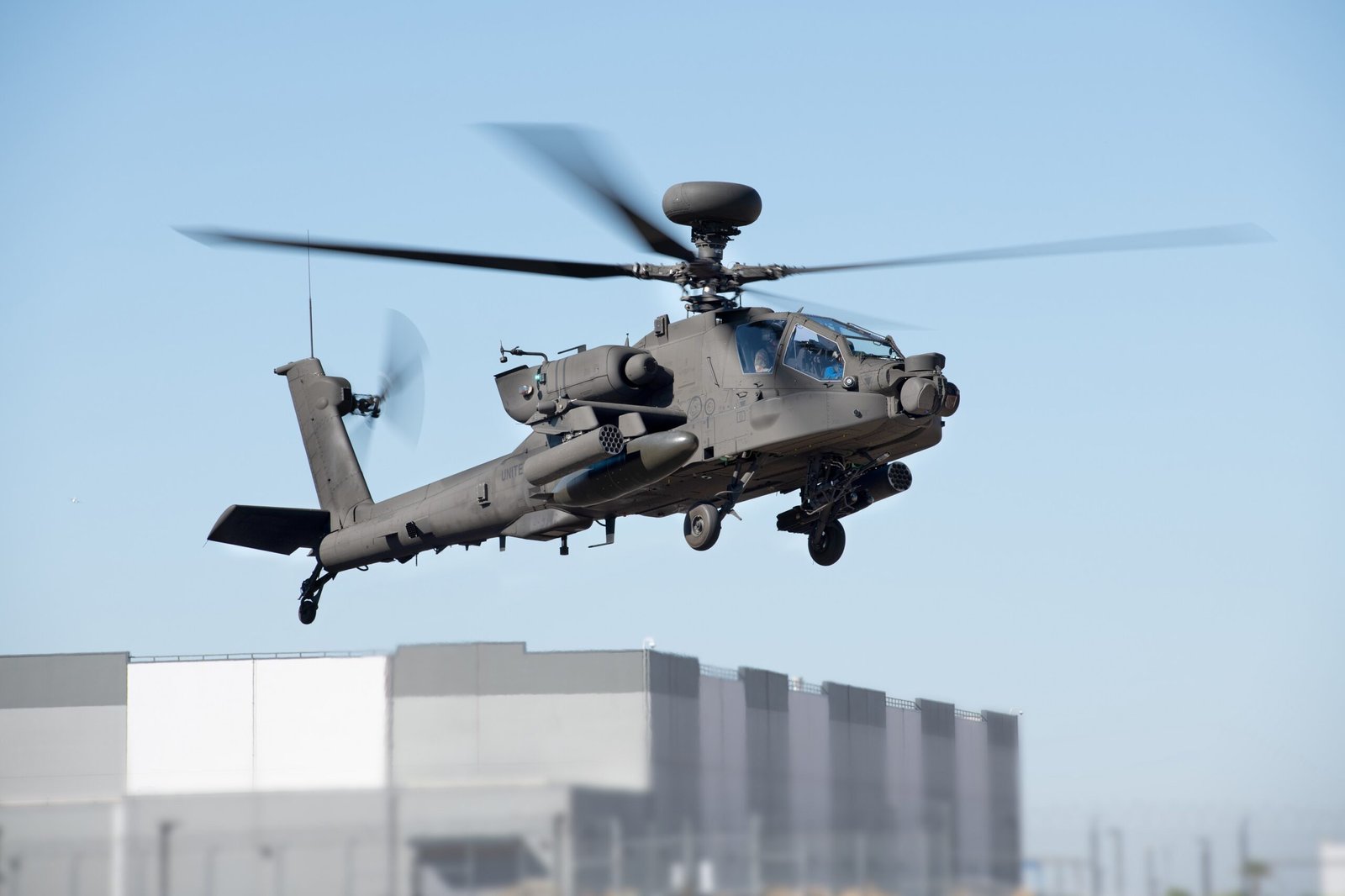
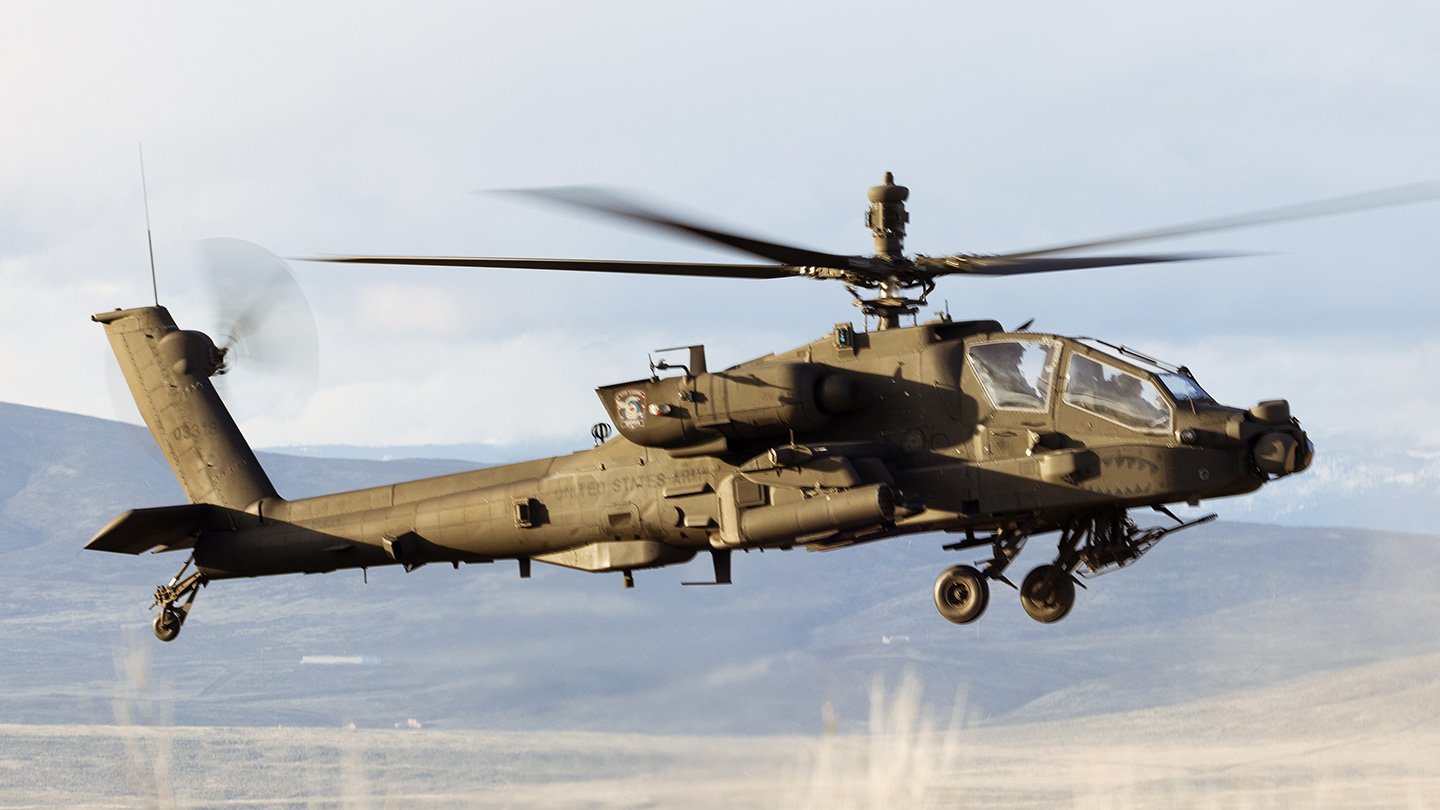
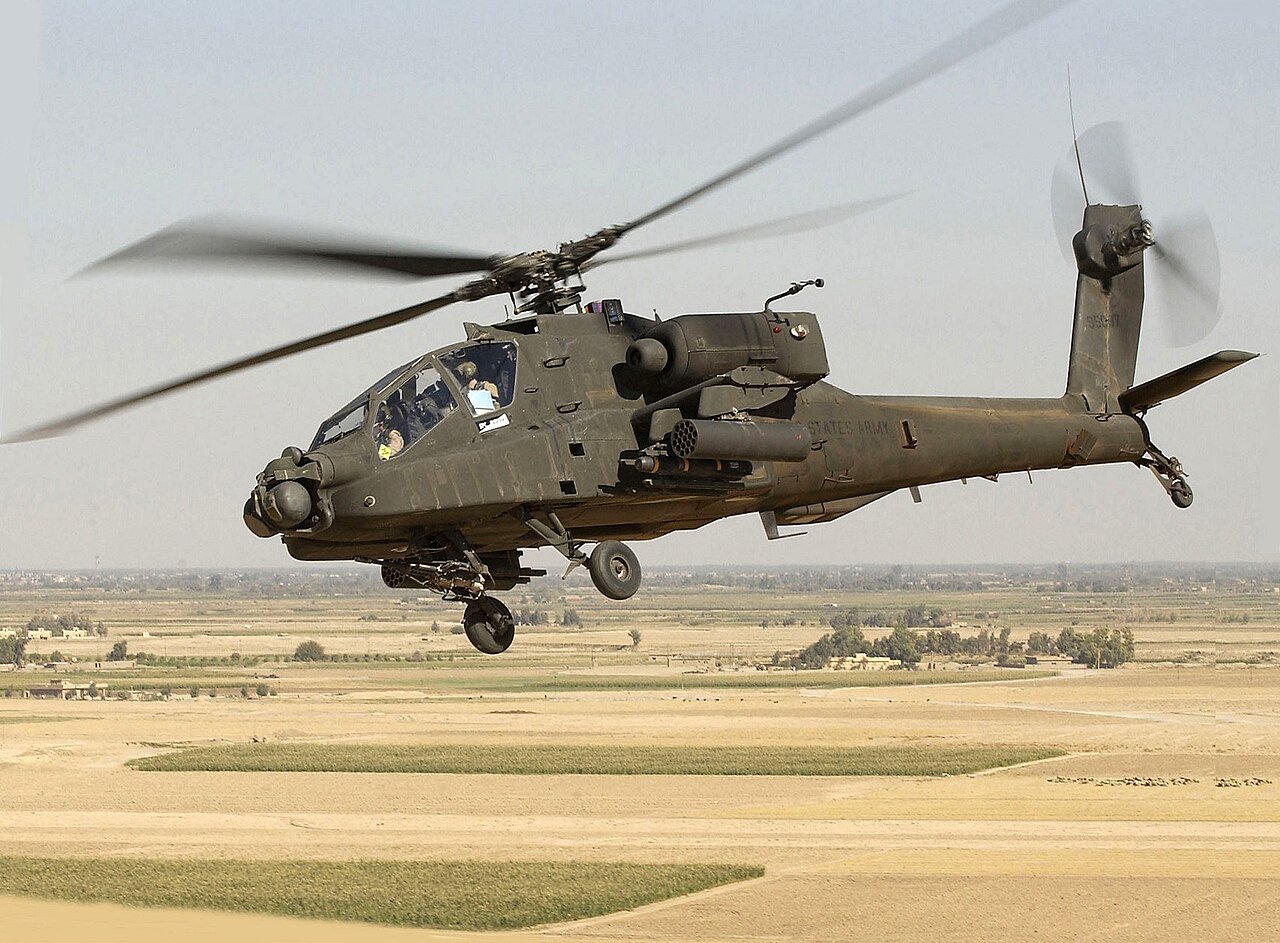
Photos: www.planespotters.net · wall.alphacoders.com · ar.inspiredpencil.com · www.army.gov.au · en.wikipedia.org
The AH-64 Apache is a twin-engine attack helicopter developed by Hughes Helicopters and produced today by Boeing, which absorbed the programme through its 1997 merger with McDonnell Douglas. It entered service with the United States Army in 1986 as the replacement for the AH-1 Cobra, built around a hunter-killer role at standoff ranges and in weather the Cobra could not match. Four decades on it remains the backbone of American rotary-wing close air support and one of the most widely exported attack helicopters in the world, with operators including Israel, the United Kingdom, Saudi Arabia, Egypt, the Netherlands, Japan and India.
The airframe carries a chin-mounted M230 30 mm chain gun slaved to the Target Acquisition and Designation Sight and Pilot Night Vision Sensor turret, and stub wings that mount up to sixteen AGM-114 Hellfire anti-armour missiles or Hydra 70 rocket pods. Two General Electric T700 turboshafts drive the four-blade main rotor. The AH-64D Longbow variant, fielded from the late 1990s, added a mast-mounted Northrop Grumman AN/APG-78 millimetre-wave fire-control radar that lets the crew acquire and prioritise armour from behind cover without exposing the aircraft. The current AH-64E Guardian moved to composite rotor blades, uprated T700-GE-701D engines, an open-systems avionics bus and manned-unmanned teaming with smaller UAVs, allowing the crew to stream sensor video and hand off drone control from the cockpit. In August 2026 the US Army solicited industry partners to produce the General Electric T901-GE-900 turboshaft under the Improved Turbine Engine Program, per open-source reporting — an upgrade intended to raise power and fuel efficiency across the Apache and Black Hawk fleets.
Combat history runs from Panama in 1989 through the 1991 Gulf War, where Apaches opened the air campaign by destroying Iraqi early-warning radars, and continues through two decades of counter-insurgency work in Iraq and Afghanistan. Israel has flown the type in Lebanon and Gaza; British Army Air Corps Apaches saw heavy use in Helmand province. Losses have been public: shoulder-fired missiles brought down aircraft over Iraq, and Houthi forces in Yemen have claimed several Saudi Apaches downed during the Yemen intervention. Export sales have run steadily — the US State Department cleared a Polish order for 96 AH-64E aircraft in 2023, one of the largest Apache foreign military sales on record.
Development continues around the E-model. Boeing has pitched a Version 6.5 configuration extending the airframe’s service life into the 2050s, and the Army has explored a Modernized Apache concept incorporating lessons from the cancelled Future Attack Reconnaissance Aircraft programme. Its closest competitors are the Bell AH-1Z Viper flown by the US Marine Corps and the Airbus Tiger; the Apache’s enduring edge is the Longbow radar and the depth of the sustainment base built up over forty years of continuous production.