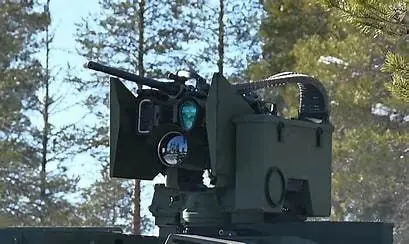
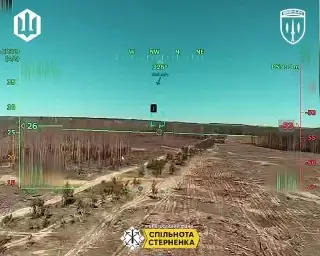
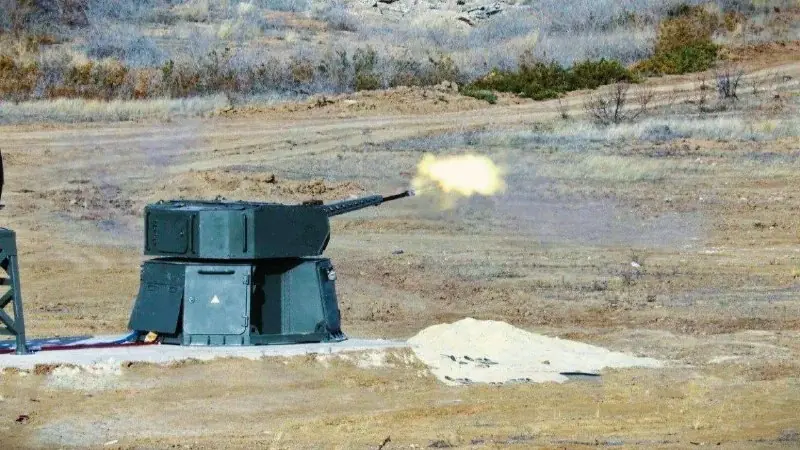
France's REFURBOT project is converting obsolete AMX-30 tanks into remote-controlled platforms by replacing turrets with 25mm remote weapon stations. This aims to bolster heavy armor numbers amid a limited Leclerc fleet.
Russian milbloggers report the use of new drones equipped with cumulative charges specifically targeting power lines in Kyiv, Kharkiv, and Odesa. These attacks are claimed to cause prolonged outages, isolating cities from essential services.
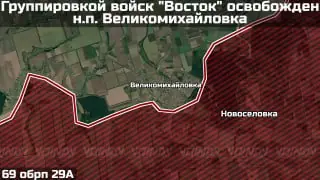
The 69th Separate Cover Brigade claims to have destroyed 42 ground robotic complexes and over 110 hexacopters (Baba-Yaga type) near Velikomikhailovka in the Dnipropetrovsk region. This suggests significant Ukrainian reliance on ground robots for logistics or assault in this sector.
Russian troops in Zaporizhzhia deployed drone jammers on UAZ 'Bukhanka' vans transporting Ukrainian POWs to Donetsk to prevent drone strikes during transit. This indicates a specific tactical adaptation to counter Ukrainian loitering munitions targeting high-value personnel.
Russian MoD claims its new AI training service allows a single crew to control 'drone tank groups', hiding unmanned units from enemy detection. This extends the recently announced AI training platform by detailing its tactical application in swarm coordination.
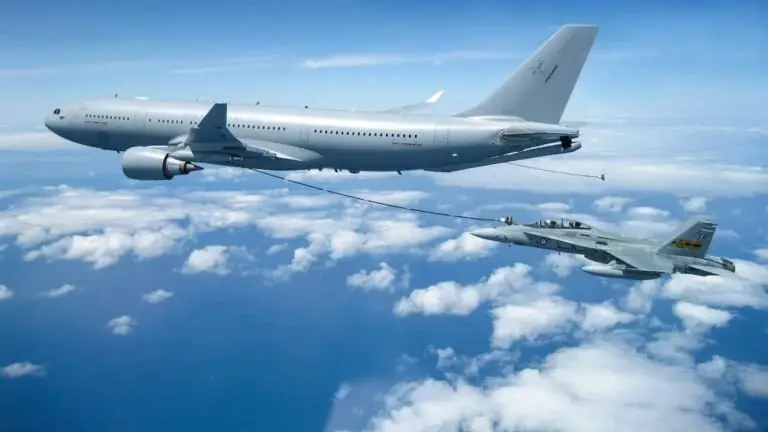
The European Defence Agency launched a new research phase focused on automating mid-air refuelling of unmanned aircraft, involving Spain, Germany, and Belgium.
Kongsberg is building a production facility for counter-drone systems in northern Poland, investing over $51 million and creating over 100 jobs, with production expected in H1 2028.
Ukrainian Unmanned Systems Forces report over 66,000 missions by Unmanned Ground Complexes (UGCs) in H1 2026, used for ammo delivery, evacuation, engineering, and mine clearance.
Ukraine has launched an experimental drone delivery project for medicines, blood samples, and donor organs, with the Institute of Cardiology as the first tester.
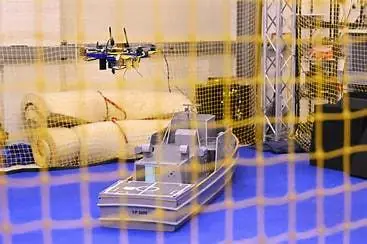
The Naval Air Warfare Center Aircraft Division tested an unmanned aircraft system capable of autonomous landing on pitching decks using onboard cameras and motion sensors without GPS or human pilot.
Russian UAV operators in Sloviansk reported identifying a suspicious civilian with a black backpack but chose not to strike due to the risk of hitting non-combatants. This highlights ongoing challenges in AI-assisted target identification and rules of engagement in dense urban environments.
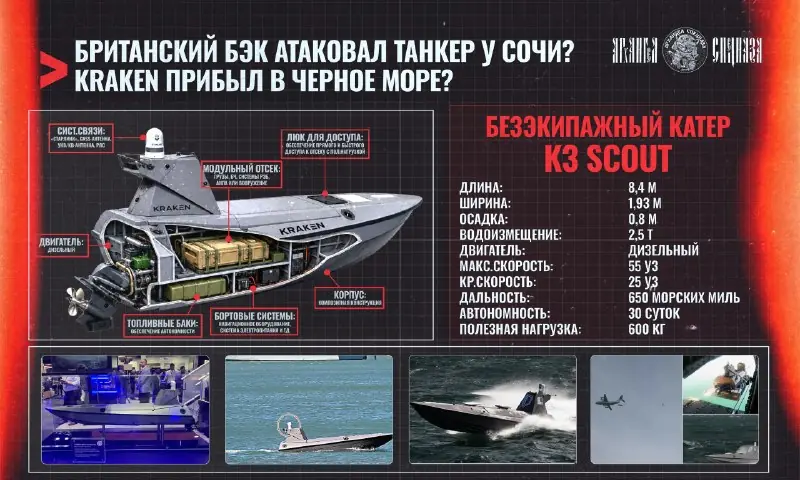
Ukrainian Kraken K3 naval drones used against Russian Black Sea targets reportedly contain Chinese equipment transmitting data to China, according to The Times via Barantchik.
Ukrainian sources report Russian Geran-5 loitering munitions reaching speeds of 700-800 km/h to outpace Ukrainian counter-drone interceptors, which max out at 465 km/h. This speed advantage is increasing the effectiveness of Geran-5 strikes against air defenses.
Airbus and Kratos successfully tested the U740-Valkyrie unmanned combat air vehicle in Northern Europe, utilizing MARS AI software for autonomous swarm coordination. The 3-ton, 5,000km-range platform features an internal weapons bay and represents a significant step in European autonomous air warfare.
L3Harris Technologies and Divergent Technologies have signed a teaming agreement to scale production of affordable mass munitions using Divergent's additive manufacturing processes.
US Army Chief of Staff warns that continental US bases and critical infrastructure could be attacked from day one by unmanned systems, long-range fires, and stealth weapons in future conflicts.
Russian MoD introduces the Zitadel AA system, claiming it utilizes high automation and AI application to effectively intercept drones, unmanned boats, and light armor with low ammo consumption.
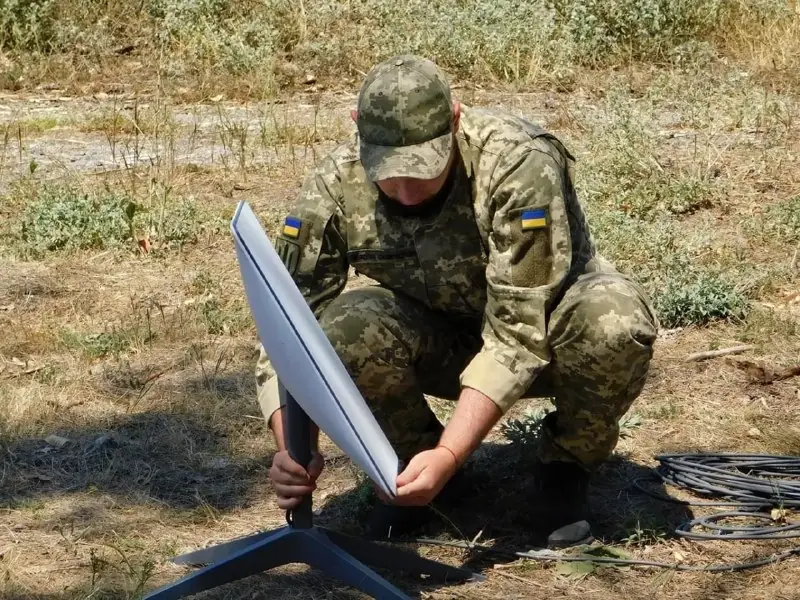
Former Ukrainian Defense Minister Mykhailo Fedorov claims Starlink terminals have been updated to support speeds up to 160 km/h, restoring full aerial drone flight capabilities previously disrupted by SpaceX restrictions.
Reuters reports the White House ordered a 160 km/h speed limit on Starlink terminals for Ukrainian forces, disrupting high-speed drone datalinks. Ukrainian sources dispute the extent, noting Zelensky's complaints and diplomatic efforts to secure expanded range.
Rybar alleges that Ukrainian drone firms like Kalkheon and Viriy import ready-made UAVs and components from China via intermediaries in Romania, Bulgaria, Poland, and Estonia to bypass neutrality claims.
Lithuanian and Ukrainian companies announce plans for a joint factory to manufacture drone components, signaling deepening defence-tech industrial cooperation.
UAVDEV criticizes the Russian Aerospace Forces (VKS) for inadequate small-airspace defense against Ukrainian drones, poor communications vulnerable to EW, and a shortage of hardened aircraft shelters.
Victory Drones reports Russia constructed a new drone launch base near the Ukrainian border within 1.5 months, indicating rapid infrastructure expansion for aerial operations.
Rostec's RT-Project Technologies presents 'Pauyna', a modular metal structure system to protect infrastructure from drones up to 200kg, developed with Standard Electric.
Russian hackers have released '1001' firmware for DJI Neo, Avata 2, and Matrice series, enabling alternative flight apps like 'Trepeta' and 'Glaz 3' for military use.
Ukraine has deployed British Kraken Technology K3 Scout unmanned surface vessels for attacks on Russian Black Sea targets including Sochi, with UK having purchased 20 units.
Russian MoD has launched a secure platform connecting over 40 drone developers to combat footage for training AI target recognition and navigation models, with feedback loops to improve systems.
Rybar analysis argues that combat AI is not a panacea, as decision quality depends on data quality, and AI does not automatically make command systems infallible.
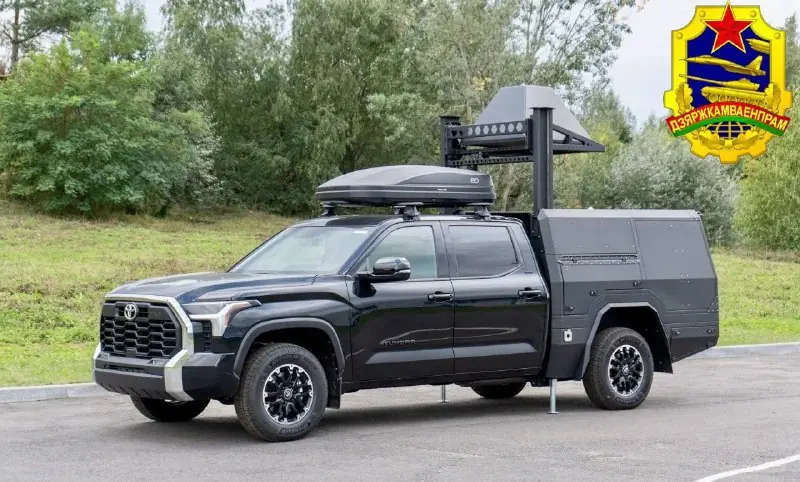
A Russian 'Ghost' project counter-drone system was showcased on a mobile chassis, featuring detection, tracking, and interception capabilities while moving, indicating a focus on mobile active counter-UAS.
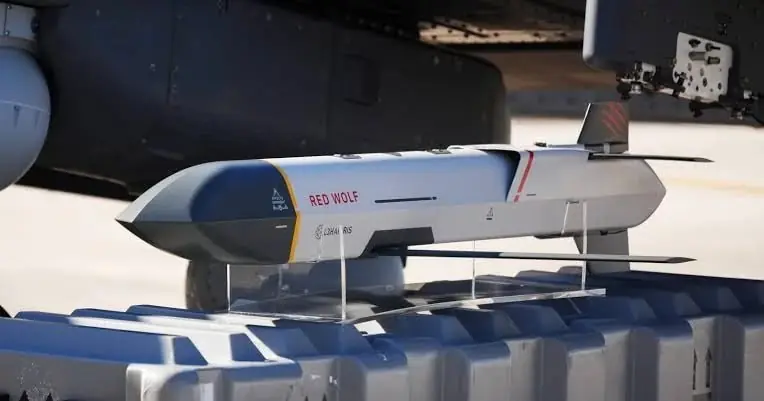
L3Harris and US SOCOM demonstrated the Red Wolf drone launched from an MH-60 helicopter, showing compatibility with the H-60 series and software for group coordination and payload modularity.
China's ADAspace launched 8 'Star Computing' satellites equipped with high-power compute and laser comms to test AI model training in orbit, part of a larger 2,800-satellite network plan.
Russian air defense systems intercepted and destroyed multiple waves of drones approaching Moscow, with reports of 10, 11, 12, and 16 drones destroyed in separate incidents on October 15.
Russian milbloggers report the use of jet-powered Geran-5 kamikaze drones to strike logistics hubs and energy infrastructure in Khmelnytskyi, Ukraine, indicating an expansion of high-speed drone targets.
Russian Western Group troops are training with the 'Courier' NRTK ground robot to deliver supplies in high-risk frontline areas. This marks a practical deployment of autonomous ground logistics systems to reduce personnel exposure to enemy drones and fire.
Russian milbloggers report that the Rubicon brigade is successfully using FPV interceptors to destroy heavy Ukrainian drones, including the 100kg Fire Point FP-2 and 50kg Lyuty. This highlights a shift in Russian tactics towards cost-asymmetric air defense using kinetic FPVs against high-value Ukrainian loitering munitions.
Ukrainian drones struck Sberbank's data center in Balakovo, Saratov Oblast, causing a major internet outage across Russia affecting Sber, Yandex, and VK, confirming the vulnerability of Russian digital infrastructure to unmanned attacks.
Video evidence shows a Ukrainian FPV drone from the 115th Separate Mechanized Brigade destroying a Russian Mi-28NM attack helicopter, valued at approximately $19 million, demonstrating the effectiveness of FPVs against high-value rotary-wing assets.
Russian milbloggers report that FPV drones and artillery are now operating in tight coordination across the contact line, with drones spotting targets for immediate artillery strikes and finishing off survivors.
Ukrainian drone manufacturers, Kyivstar, and Escadrone have launched a crowdfunding operation to raise 100M UAH for serial production of reactive interceptors designed to shoot down jet-powered Shahed drones, following successful prototype testing.
UAV Development (UAVDEV) is testing Chinese grey collinear antennas for FPV drones, noting 2.4GHz models over 2m long with 12 dBi gain for long-range circular coverage.
Russian milbloggers claim a Russian FPV drone successfully struck the British 'SKY SENTINEL' AI turret in Kharkiv from 38 km away, suggesting the AI failed to react to a slow frontal approach.
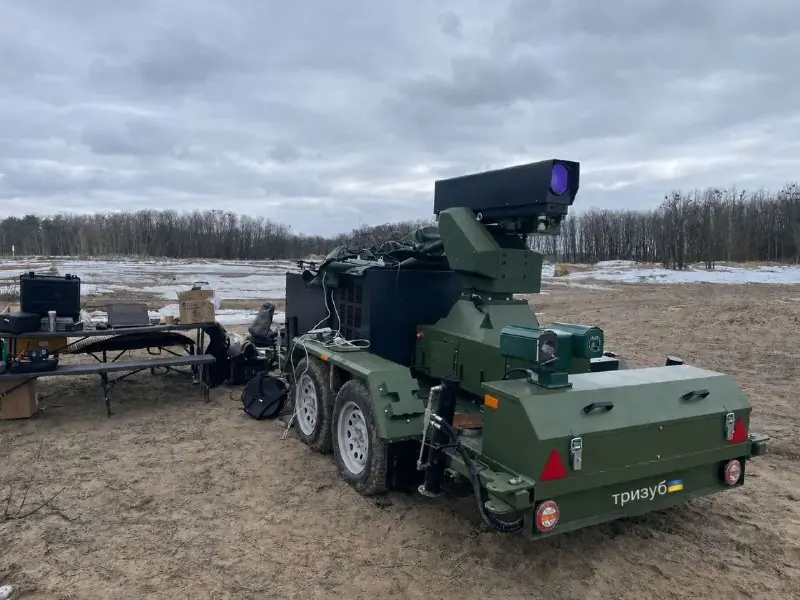
Russian firm Celebra Tech has unveiled the 'Trizub' trailer-mounted laser system, which uses AI for target acquisition and radar integration to engage drones at varying ranges.
Russian operator 'Reyz' claims to have downed 350 Ukrainian drones in six months using a combination of FPVs and electronic warfare, now training on the 'Roys F1' system.
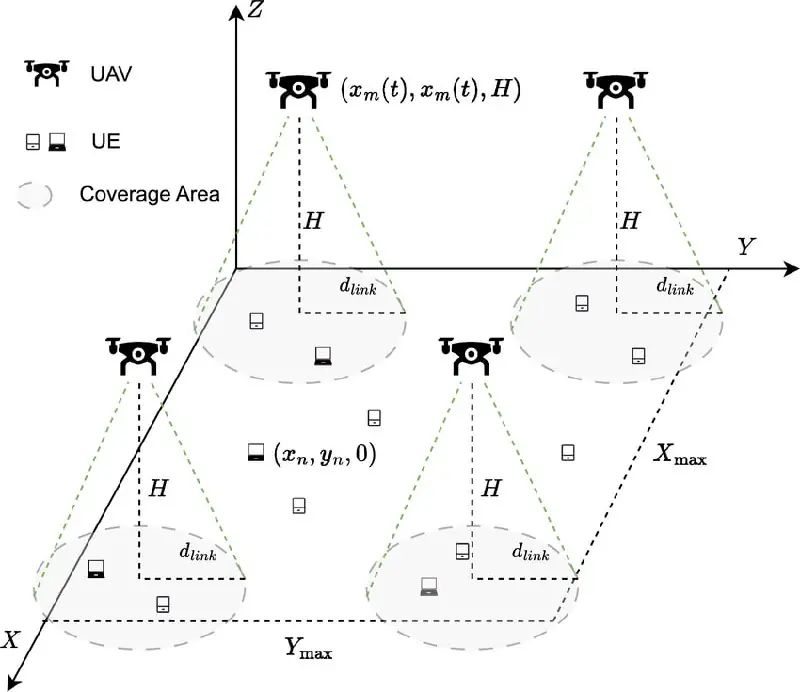
Changsha University proposes a VDDM architecture where drones serve as mobile edge-compute nodes, using AI to adjust routes and minimize latency for smartphones and sensors, showing lower latency than static towers in experiments.
Ukrainian sources report that the 429th Separate Drone Brigade 'Achilles' is systematically detecting, tracking, and striking Russian armor and artillery attempting offensive actions in the Kharkiv region.
Russian milbloggers report the construction of a new 'Millero' droneport in one month, featuring 8 launch pads and 32 prep spots for Geran drones, mirroring the 'Tsymbulovka' facility infrastructure.
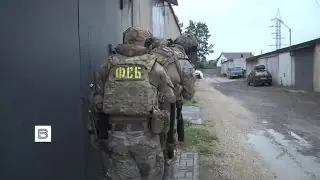
FSB arrested a Russian woman recruited by SBU to assemble and launch 9 FPV drones with explosives at Voronezh 'Baltimor' airfield, with Ukrainian operators controlling final flight.
Norwegian military found rented Deepal cars (via Hertz/Geely) recording military sites and routes during Hovedstad exercises, raising cybersecurity concerns.
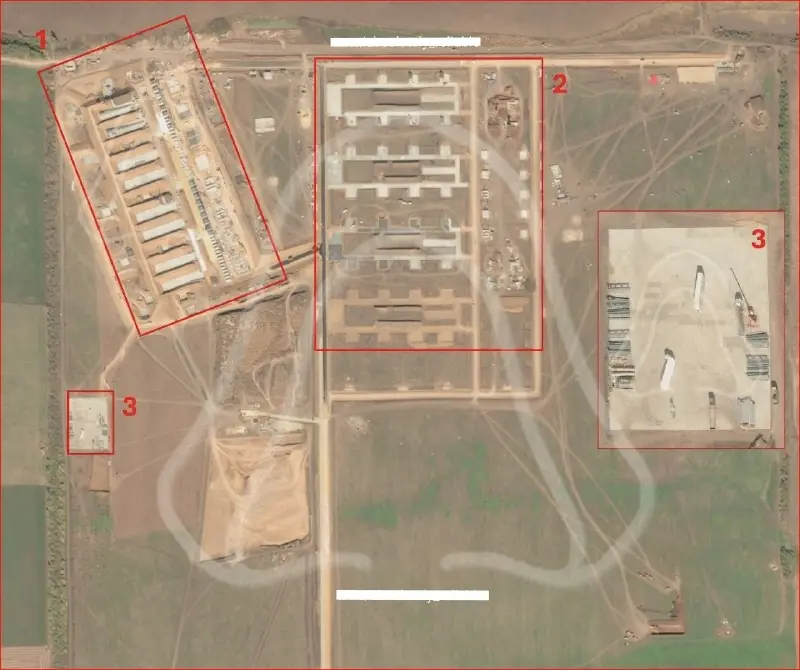
Satellite imagery indicates the Millerovo drone port is nearing completion, featuring 8 launch pads and 32 prep spots for Geran-5 kamikaze drones, signaling a significant expansion in Russian strike capacity.
Russian milbloggers report FPV operators using a fiber-optic drone to locate a target in a pipe, followed by a radio-link FPV to destroy it, demonstrating multi-drone coordination.
Rostec claims its Citadel (ZAK-30) air defense system uses programmable 30mm shells to intercept drones more efficiently than standard AA, citing automation and cost savings.
Russian MoD has created a drone video database for military neural network training, extending earlier announcements of AI training services. Fire Point claims FP-7 ballistic missile launch.
Forbes Ukraine reports Shenzhen NuanQin Technology, a Chinese sex-toy maker, supplies Russia with integrated circuits and electric motors for military production.
Ukrainian POW Pavlo Kryzhanivskyi claims FPV loudspeaker drones helped capture ~160 Russians in 6 months; now shares combat experience with US forces during training exercises in Germany.
NATO SACEUR Alexus Grynkewich unveiled a plan to use autonomous drones and ground robots to create a 'buffer zone' against Russian attacks on St Petersburg and Kaliningrad.
IAI subsidiary ELTA is showcasing the Point@Air tethered aerostat, which lifts ELM-2083A radar to 1.5km for 30-day endurance and fire control against low-flying drones.
Engineering center Ushkunik has unveiled software allowing voice and text commands to autonomously task groups of ground and air robots, retaining human-in-the-loop confirmation.
Ukraine is ramping up mass production of jet-powered interceptor drones to counter Russian Geran threats, though compact jet engine availability remains a bottleneck.
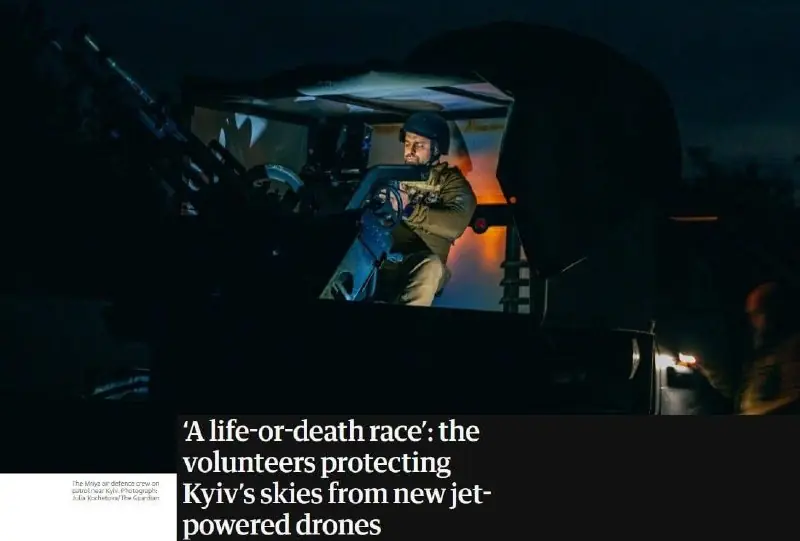
The Guardian reports that Russian jet drones, flying at ~600 km/h and 10km altitude, are overwhelming Ukrainian mobile air defense units, with commanders reporting inability to track or engage targets within standard sight pictures.
Market analysis indicates the Russian anti-drone protection market is valued at hundreds of billions of rubles but suffers from a critical talent shortage and high costs for warehouse protection compared to cheap 'token' devices.
KB Radar's Groza-Z3-JM EW system is deployed to protect vehicle groups, using RF jamming and spoofing within a 10km radius to detect and neutralize silent drones.
UAVDEV reports unboxing and deploying signal amplifiers from 'Iroquois' for Mavic and 'mattress' FPV drones to improve datalink range and reliability in live-fire tests.
Russian MoD has launched a unified service providing FPV and combat drone footage to over 40 organizations for AI neural network training and target classification.
Ukrainian B-2 strike drone successfully hit Russian logistics routes by distracting drivers with fire, then ramming a military truck, demonstrating persistent surveillance and kinetic strike capability.
Ivano-Frankivsk OVA reports Russian 'rocket drones' struck the city, killing 3 and claiming use of aerial drones for strikes on civilian infrastructure.
Russian MoD reports a drone unit from the 'Center' grouping held a telebridge with Siberian college students to discuss service conditions and contract prospects.
Russian FPV drone reportedly hit and destroyed a Ukrainian FrankenSAM (Buk-M1) system, damaging a RIM-7 Sea Sparrow missile and an M2 Browning vehicle.
UAV Development reports testing new domestic PT4806 transistors for drone regulators, claiming lower channel resistance than previously tested PT0206 units.
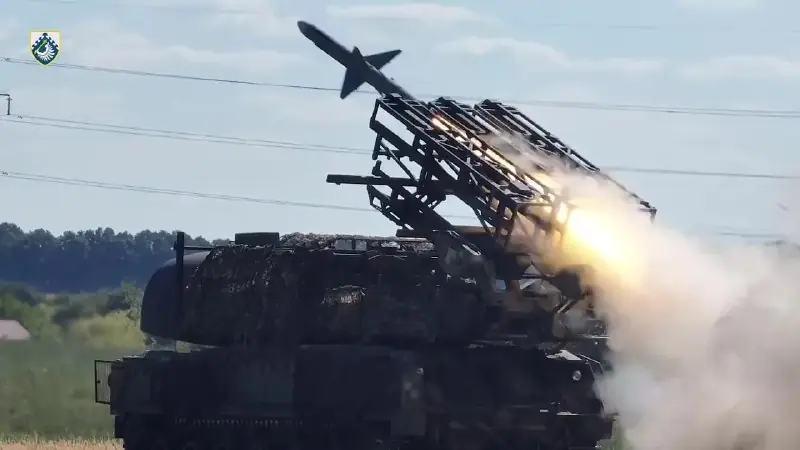
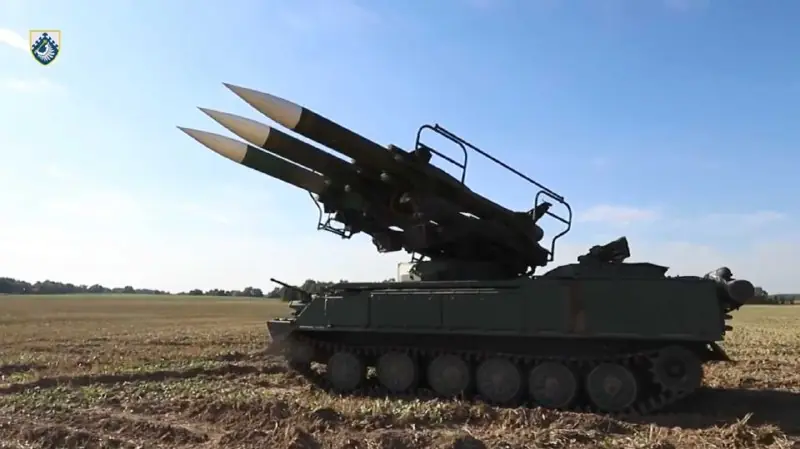
Footage indicates Ukrainian forces are modifying Soviet-era Kub (2K12M1-2D Quadrad-2D) launchers by integrating Buk fire control units, creating a hybrid system designed to enhance target engagement against drones and low-flying aircraft.
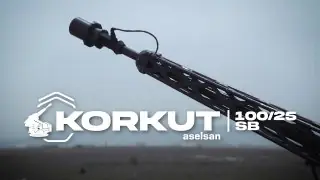
Ukrainian sources confirm the receipt of Turkish Aselsan Korkut 25mm air defense systems, equipped with ATOM airburst ammunition effective against drones at ranges up to 1km, marking a significant upgrade to mobile counter-drone capabilities.
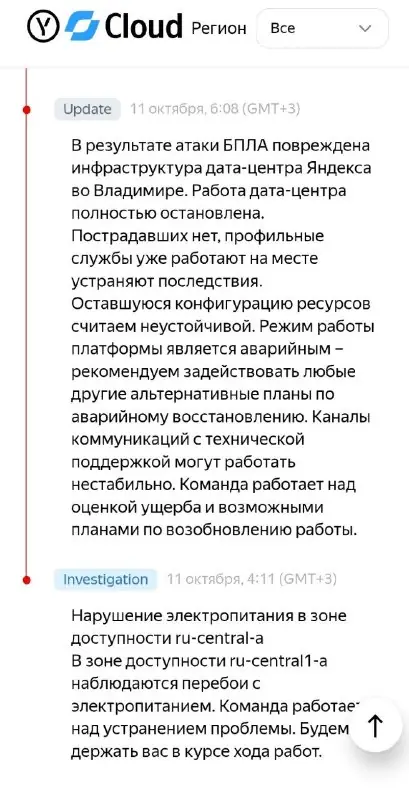
Ukrainian forces have conducted a third strike on a Yandex data center in Vladimir, indicating sustained production and deployment of specialized long-range kamikaze drones, likely utilizing 3D-printed airframes to bypass supply constraints.
Russian milbloggers claim Ukrainian units are now 3D-printing drone bodies and filling them with explosives to compensate for shell deficits, using humanitarian-supplied printers.
Russian milbloggers report that the Alabuga Special Economic Zone is constructing at least 10 new workshops for Geran drone production, signaling a significant expansion of Russian military drone manufacturing capacity.
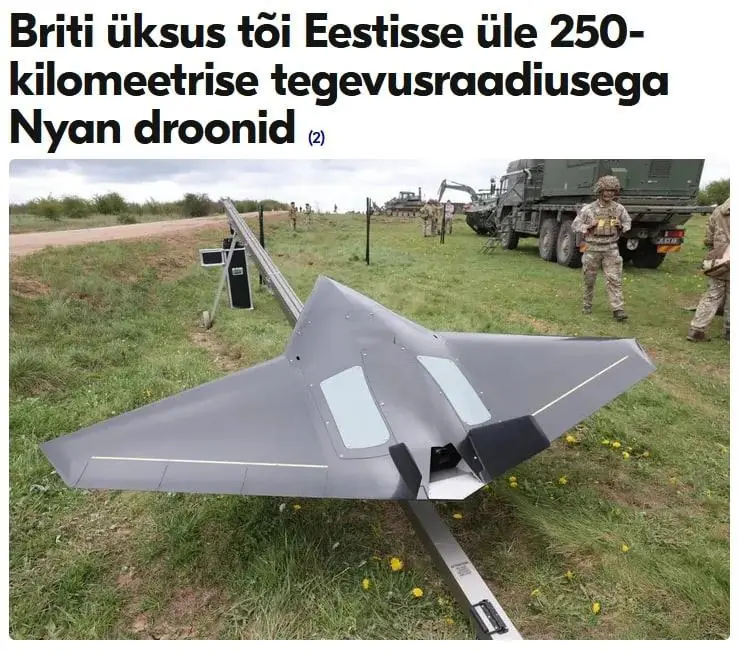
Reports indicate the first batch of British Nyan turbojet kamikaze drones has been delivered to Estonia, stationed at a NATO base in Tapa approximately 250km from St. Petersburg.
Ukrainian drone strikes caused a total operational shutdown of a major Yandex data center in the Vladimir region, disrupting cloud and consumer services across Russia.
Bloomberg reports that Russia is supplying missiles to Iran, which retains its own production capacity, while Tehran has previously requested Geran-4 and Geran-5 drones from Moscow, signaling deepening military drone cooperation between the two states.
Ukrainian STRIKES drone unit claims to have destroyed nine Russian EW vehicles and four communication antennas in Belarus using drones resistant to enemy EW.
Ukrainian sources report naval drones penetrated Russian air defenses in Novorossiysk harbor and struck a warship, with video evidence showing the attack.
Japanese Defense Minister Shintaro Koizumi announced Tokyo has contracted to purchase interceptors from Ukrainian company SkyFall, praising their rapid development.
Russian channels report Geran-2 UAVs now use 'Susannin' autonomous optical navigation, comparing camera feeds to pre-loaded maps to bypass GPS jamming, though accuracy degrades at night or in fog.
Ukrainian security services report the destruction of a Russian S-400 Triumf launcher in the Bryansk region and the first confirmed strike on a Pantsir-SMDE short-range air defense system mounted on an anti-drone tower.
Russian channels report the use of jet-powered drones to strike Lviv and Ivano-Frankivsk in western Ukraine, marking a significant range extension compared to previous Geran-2 campaigns.
Russian drone operators from the 37th Guards Motor Rifle Brigade have destroyed Ukrainian NSU (unmanned aerial systems) antennas in the Zaporizhzhia direction to disrupt enemy drone command and control.
Russian milbloggers report a refined combined-arms tactic in the Slavyansk-Kramatorsk agglomeration where reconnaissance drones identify targets, artillery breaches fortifications, and FPV drones deliver the final strike to destroy Ukrainian strongpoints.
Russian milbloggers report the BRM-80 recovery vehicle is being equipped with Relikt ERA, NII STALI 4S24 ERA, anti-drone mesh cages, and Triton EW jammers to enhance survivability against FPVs and loitering munitions.
Ukrainian operators are testing acoustic targeting via microphones on loitering munitions, while the upgraded FP-1 kamikaze drone now claims a 3400km range with new signal-receiving equipment.
Russian VEGA DV is a mobile launcher for three autonomous interceptor drones (3.5kg, 350km/h) that engage targets using fully autonomous guidance without manual operator control.
Russian VA Technologies unveiled the 'SOVA' system at Drone Expo 2026, a CPU-based visual navigation module enabling GPS-denied drone operations by matching camera feeds to satellite imagery.
Russian 'People's Front' promotes 'Svayekrut' systems on Gaz-66 chassis to deploy anti-drone nets over roads, claiming protection from Ukrainian FPVs in Kherson.
Azerbaijani company Zireh presented the HMS30 mobile anti-drone system at ADEX 2026, featuring a 30mm gun on a Kamaz truck for point defense against UAVs.
Russian milbloggers report Geran-2 drones equipped with 'whiskers' (likely EW countermeasures or sensors) and KRSN guidance kits striking targets in Dnipropetrovsk, indicating continued technical evolution of the Geran family.
Russian drone operators report critical FPV shortages, high failure rates in new batches, and friendly electronic warfare systems jamming their own drones.
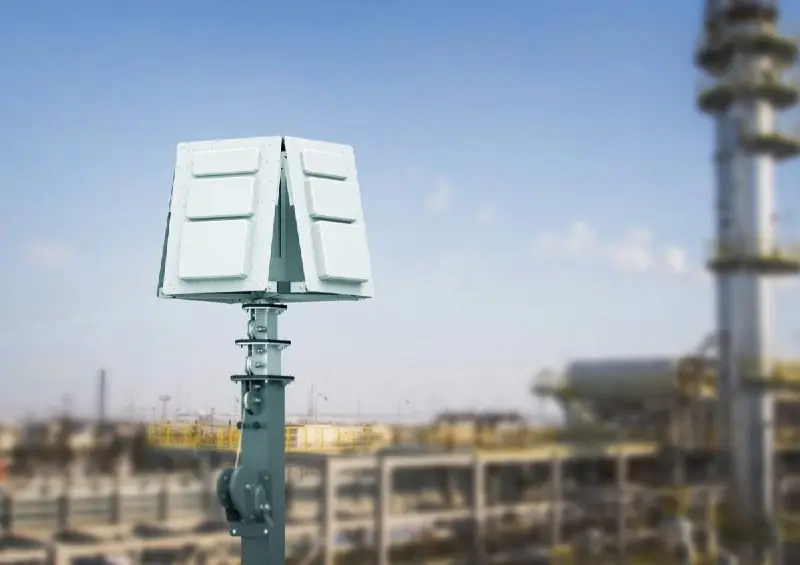
Rostec's Rosel division presents 'Ogonek', a passive drone detection system that scans for video streams to distinguish drones from civilian signals without emitting radar.
Ukrainian President Zelensky claims strikes on Omsk and Ukhta refineries using An-196 RS and modified FP-6 drones, indicating expanded Ukrainian long-range strike capabilities.
Russian milbloggers report a new cumulative-cutting warhead (KRSN) for Geran-4 drones designed to sever high-voltage power lines, aligning with Ukrainian reports of swarming tactics against the energy grid.
Russian milbloggers analyze a net-grenade anti-drone system that uses threads to entangle rotors, noting its variable range, high cost, and need for precise detonation control.
Russian milbloggers report the 'Center' group employed a tandem drone strike tactic to destroy a Ukrainian fortified point on the Dnipropetrovsk direction.
Russian milbloggers claim Ukrainian drones use AI to prioritize live forces, while also reporting a shift toward small air balloons for ISR and delivery in the Yaroslavl region to bypass expensive kamikaze drone costs.
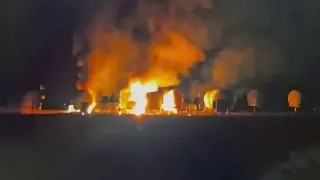
Russian milbloggers report a Russian FPV drone operator destroyed six NTRKs and an ammo stockpile in a forest at 35km range, with video showing an intense fireball.
Russian milbloggers claim a Ukrainian 'Hornet-2' AI-equipped strike drone was shot down by soldiers relying on instinct over AI, while also mocking claims of Ukrainian AI anti-drone turrets.
Ukrainian sources claim Kyiv has deployed over 12 AI-equipped 'Sky Sentinel' robotic turrets capable of autonomous target acquisition and shooting down jet drones.
Russian MoD reports certification of Phantom Defense's Blade interceptor drone, capable of 310 km/h and 30km range, designed to intercept fixed-wing UAVs.
Ukrainian monitors report Russia attacked the Ivano-Frankivsk region with a jet drone for the first time, signaling potential expansion of long-range strike capabilities into western Ukraine.
Russian Foreign Ministry reports Chancellor Merz announced 1bn euro in aid for FPV drones and long-range weapons during a visit to Kiev, alongside 15 defense agreements worth 8.5bn euro.
Russian drone operators report widespread flight plan rejections since October 1 due to missing ERA-GLONASS trackers, with the Aeronekst association complaining to the Ministry of Transport.
Ukrainian drones struck the Yandex Sasovo data center in Ryazan and a gunpowder plant in Kotovsk, indicating expanded targeting of Russian industrial and logistics infrastructure.
Rostec subsidiary Rosel presents the 3D PKL, a passive coherent radar that detects small UAVs using reflected TV and radio signals, claiming immunity to enemy EW and anti-radiation missiles.
Russian milbloggers report effective coordination between artillery and FPV drones in the Sviatohirsk-Kramatorsk sector, using FPVs to destroy Ukrainian positions and vehicles while maintaining constant frontline control.
Russian channels report the integration of Teledyne FLIR's Prism A-ISR module into UAVs, providing onboard AI for simultaneous tracking of up to 16 targets with ~10ms processing latency.
Auterion has presented the Nemyx VLS, a modular vertical launch system for drones that offers 30% higher density and scalability to ISO containers, compatible with multiple manufacturers.
Russian Geran-2 drones, derived from Iranian Shahed technology, have been reported deployed in Mali for strikes against militant positions, demonstrating the export of Russian-Iranian drone tech.
Russian forces have deployed the 'Courier' armed robot to counter Ukrainian drone pair attacks, with one operator controlling three units to engage aerial targets.
French company Harmattan AI has unveiled the IRIFI, an autonomous long-range drone capable of striking targets up to 2,000 km away, highlighting advancements in French autonomous strike capabilities.
German firm Quantum Systems signed a letter of intent to supply tens of thousands of SPYS drone interceptors to Ukraine, claiming the system can shoot down reactive drones.
Ukrainian drone forces have successfully struck multiple high-value Russian industrial and digital infrastructure targets, including the Sasta defense machine tool plant, the Yandex Cloud data center in Sasovo, and the Gazprom Neft Salavat refinery.
Ukrainian sources report Russian Geran-5 loitering munitions striking power infrastructure near Kyiv, indicating operational deployment of the upgraded variant.
Ukrainian sources report the 414th 'Hungarian Birds' Brigade conducted over 7,000 missions over Crimea in summer 2026, establishing a stable drone presence.
The Omsk Armored Tank Engineering Institute is training cadets on Courier (Kuryer) unmanned ground vehicles, indicating integration into Russian military education.
Russian milbloggers claim destruction of multiple Ukrainian UAV command posts and comms antennas near Donetsk and Kramatorsk, disrupting local drone operations.
Ukrainian sources report Russian Southern Group forces using a combined arms tactic where reconnaissance identifies targets, artillery suppresses, and FPV drones finish off positions in the Slaviansk-Kramatorsk area.
Chinese PLA Engineering University opened three new colleges focused on UAVs, autonomy, AI decision-making, and secure comms to prepare for drone warfare by 2027.
Ukrainian MiG-29 pilots claim to have intercepted a Geran-4 jet drone in the Kyiv region by flying through fire and debris, highlighting emerging jet drone threats and interceptor capabilities.
Russian blogger Zhirov claims the 'Storm' T-90 tank drone is fully automated but relies on a nearby command tank for datalink due to lack of long-range comms, forcing the command tank into kill zones.
The Estonian Defence Forces warn that high offshore wind farms in the Baltic Sea could obstruct or interfere with drone detection and counter-drone systems, creating security blind spots.
UAVDEV reports Ukrainian operators are using Ubiquiti Nanostation M2 devices to create 15km Starlink mesh links, reducing costs but exposing systems to jamming on standard frequencies.
The US Army has awarded Anduril Industries the lead role in the operational rollout of NGC2, a next-generation command and control system designed to modernize military communications and data sharing.
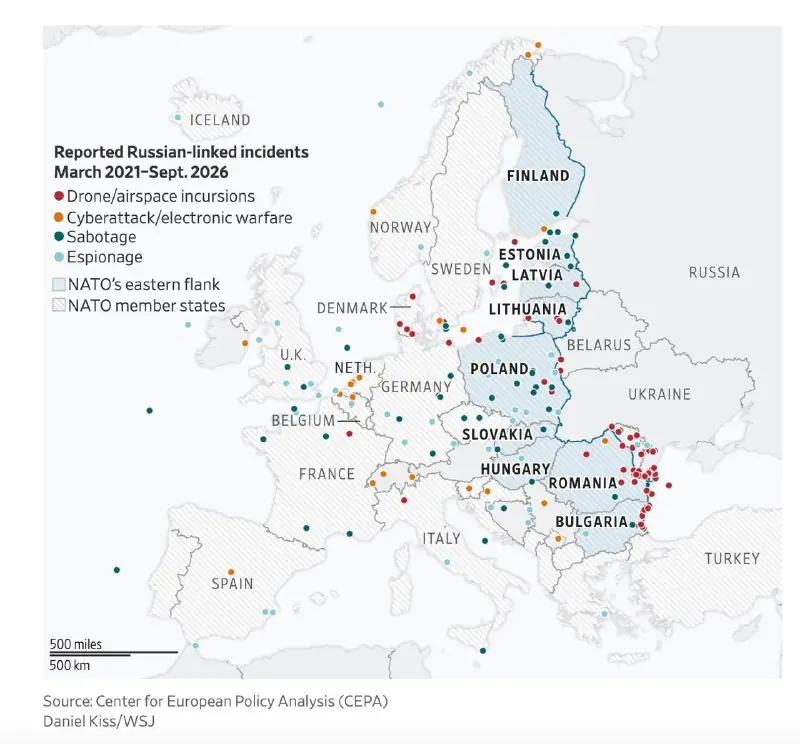
NATO's Eastern Flank Deterrence Initiative aims to establish a 'Kill Web' along the eastern flank, utilizing a forward zone saturated with drones, satellites, and AI sensors to absorb initial strikes.
Russian milbloggers claim a new 'net thrower' system using grenade-launched tape ribbons effectively tangles FPV rotors, extending engagement range beyond previous net-based counter-drone methods.
Russian milbloggers and Ukrainian sources confirm a mass attack involving 46 Geran-4 jet drones targeting the Snezhansky aviation plant and other defense sites in Kyiv and Chernihiv regions.
US company AEVEX, previously sanctioned by China, expanded operations in Taiwan, transferring Lynx USV tech to Marines and partnering with CiRC on VANDAL/Onyx drones.
Russian milbloggers claim East Grouping drones destroyed M109 Paladin SPHs and M777 howitzers in Zaporizhzhia, citing vulnerability of Western systems.
Ukrainian forces report using FP-2 drones to destroy the Snezhansky Machine-Building Plant, a key supplier of aircraft engine parts for Russian military aviation.
Ex-Google CEO Eric Schmidt claims Russia has accelerated Geran-2 drone upgrades using Chinese jet engines, increasing speed, altitude, and interception difficulty.
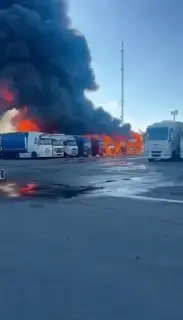
Russian MoD claims a strike on a Marshall Islands-flagged commercial vessel carrying rapeseed oil in the Black Sea, though details of the weapon used are not provided.
Ukrainian 3rd Army Corps air defense commander Maxim Zaychenko reports reorganization into an echeloned system with centralized data fusion from radar, visual, acoustic, and EW sources.
Ukrainian strike drones hit the Volodarskaya linear production dispatch station in the Moscow region, a key fuel node supplying Moscow airports and refineries, causing major fires.
Ukrainian UAV Forces report striking 2,600 targets in a single day, including 662 drones, 59 launch points, and 189 vehicles, with over 12,000 targets hit since October 1.
Russian milblogger Romanov claims Ukraine is deploying AI-equipped Sky Sentinel robotic turrets in Kyiv, with over 12 units operational and claims of shooting down drones.
Russian drone operators from the 50th Varyag Brigade claim to have destroyed a Ukrainian high-altitude aerostat at 10km carrying a Starlink module, disrupting swarm signal control.
Ukrainian sources report the installation of light anti-drone nets on Kyiv's Northern Bridge as a temporary countermeasure against heavy Geran-5 drones, following recent strikes on the structure.
The US Navy has ordered 30 Saronic Marauder Unmanned Surface Vessels (USVs) at $40m each, a move criticized by analysts as missing the point of cheap swarm tactics.
Russian milbloggers report a tactic in the Slaviansk-Kramatorsk area where artillery is used to expose Ukrainian positions, which are then destroyed by FPV drones.
German automotive giants including GM, Renault, VW, and Continental are entering the defense sector by producing drones and loitering munitions, signaling a significant shift in European defense industrial capacity.
Russian sources report the new Geran-4 loitering munition replaces Chinese Telefly engines with domestic Alabuga units and uses Sushanin EO correlation navigation, enabling strikes on bridges and lines.
NATO Supreme Commander Gen. Alexus Grynkewich is preparing a 'Theory of Victory' strategy combining traditional forces with cheap drones, autonomy, and AI-guided targeting for rapid engagement.
Germany officially supplied Ukraine with four Skynex air defense systems, each comprising Oerlikon Revolver Gun Mk3 units, Skymaster CN-1 fire control, and X-TAR3D tactical radar.
Ukrainian sources report the installation of 12 automated AI-controlled turrets in Kyiv to counter Shahed drones, with claims of up to six targets destroyed per night during mass raids.
Russian milbloggers report the use of 'KVN' fiber-optic FPV drones in Zaporozhye, where an operator identified a civilian vehicle and aborted the attack, demonstrating abort capability.
Russian MoD claims the 'Koldun' unit used captured Ukrainian drone operators to feed false radio traffic for five days, tricking Ukrainian forces into dropping supplies to Russian positions and striking their own troops.
Ukrainian sources report the installation of 12 automated anti-drone turrets in Kyiv, with plans to increase numbers, to supplement existing AI-controlled defenses against Geran drones.
Ukraine and Germany signed an €8.5bn agreement covering Patriot missiles, interceptor drones, small rockets, radars, and ground robotic systems, with plans to increase production in Germany.
Russian sources report the demonstration of the Shturm heavy assault robotic system at Center-2026, designed for urban combat with remote or crewed operation capabilities.
Russian MoD claims Geran-2 drones struck Kyiv's Northern Bridge, damaging roadway and halting traffic, while Ukrainian air defense reportedly did not engage.
Russian advisor Beskrestnov demonstrates mesh relays for correcting drone strikes on Kyiv, claiming they can be built in a suitcase using internet and power to jam modems/routers.
Russian state media shows enterprises deploying 1941-era barrage balloons with Kevlar cables to protect oil refineries and industrial sites from Ukrainian UAV strikes.
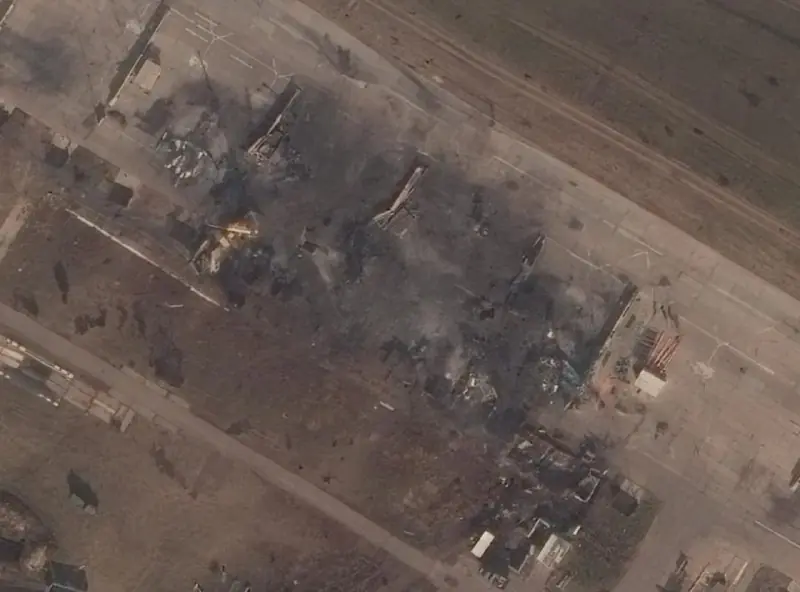
Multiple Ukrainian and OSINT sources confirm drone strikes on Khansk airfield in Adygea, damaging or destroying Su-34, Su-35, and Su-30 aircraft. Russian MoD claims 559 drones shot down but omits the Adygea location.
Russian MoD claims Geran-4 Sikher drones struck four cargo ships in the NW Black Sea and Chornomorsk port, aiming to disrupt military logistics to Odesa.
Zelensky confirms Ukraine is developing a Starlink-like satellite network to reduce reliance on SpaceX and counter Russia's 'Rassvet' system. The goal is to secure datalinks for long-range drones against electronic warfare.
Zelensky contacted Fire Point developers to accelerate production of the FP-9 ballistic missile, claiming readiness by autumn 2026 with range to Moscow. This follows the use of the FP-7 ballistic missile in combat.
Ukrainian sources demonstrate a KAZ-net system protecting armored vehicles from FPV drone rear-attacks, with confirmed effectiveness against horizontal approaches.
Russian milbloggers claim the 'Sever' MOG is using an AI-equipped 'Fox' drone capable of weather-independent operations against various Ukrainian UAVs.
Moldovan authorities confirm that three missiles and two drones violated national airspace and detonated on territory, with debris found in multiple districts, raising concerns about war encroachment.
Ukrainian sources report that NC13 robotic ground complexes and operators are using fiber-optic net launchers to neutralize Russian FPV drones, a tactic that reportedly bypasses standard electronic warfare defenses.
Dutch MoD transferred €200M+ arms contracts for Ukraine to Martijn Walraven's Aurexys after DTS Armory license revocation. MP Annabel Nanningi calls it scandalous.
MoD reports use of new ground missile system 'Izdeliye 347' with upgraded LUMR at Chebarkul range during Center-2026 exercises to destroy artillery positions.
Japanese MP Itsunori Ononoda says Tokyo may supply Patriot PAC-3 interceptors to Ukraine; legislative hurdles remain but internal talks are restarting.
Pentagon's Meridian project, co-led by Musk and Luckey, aims for US military dominance via AI, autonomy, and directed energy, with a report due Jan 2027.
Russian MoD and multiple channels confirm Geran-2 strikes hit Kyiv's Northern Bridge and a Black Sea bulk carrier, with engineering analysis noting warhead limitations against stay cables.
Center-2026 exercises and Kalashnikov footage reveal Geran-2 speed variants up to 450 km/h and first combat use of the Kub-10M kamikaze drone against MLRS.
US-France firm Harmattan AI demonstrated the Gobi autonomous interceptor, a 350 km/h, 10 km range drone with kinetic kill capability designed for EW-denied environments.
UAVDEV analysis confirms Ukrainian drones are specifically targeting stay cable attachments on bridges in the Kyiv region to disable cargo transport without requiring total structural collapse.
Russian KURS remote control stations for UAVs now feature fiber-optic telemetry and rotating antennas to bypass EW, with units being tested by Kemerovo State University.
Japan is testing Ukrainian SkyFall interceptor drones and Cambridge Aerospace is proposing local production of the Skyhammer interceptor for the JMSDF.
Russian MoD claims 209 Ukrainian fixed-wing drones were intercepted across 14 regions during Center-2026 exercises, alongside demonstrations of new anti-drone systems.
Russian milbloggers claim new FPV drones with terminal guidance can strike despite heavy Russian EW jamming, indicating a shift toward autonomous or fiber-optic terminal phases.
Lithuanian forces are trialing the Ukrainian SkyFortress system, which uses AI for real-time acoustic and radio classification of drones to supplement air defense.
Russian milblogger Rybar analyzes the emerging use of neural networks for 'neuro-jamming' and the generation of false battlefield reports, marking a shift in information warfare tactics.
Russian sources report the development of a new cumulative-cutting warhead (CCWH) for the Geran-4 loitering munition, featuring a 40kg main charge and contact sensors designed to sever power lines.
Russian 'Center' group engineers are employing drone-based reconnaissance and mining kits with side cameras to precisely lay anti-tank mines on Ukrainian logistics routes near Dobrepolie.
Russian Geran-5 loitering munitions are being used to strike Kyiv's Southern Bridge, continuing a sustained campaign to disrupt logistics and air defense repositioning. Ukrainian sources confirm repeated hits, while Russian milbloggers analyze the tactical shift toward bridge interdiction.
Russian milbloggers report that the 'Yolka' air defense drone successfully performed a kinetic intercept of a Ukrainian 'Hornet' strike drone over the Belgorod region.
Ukrainian UAV manufacturer Pegasus Arms reports significant damage to its Kyiv facility from a Russian ballistic missile strike in late September 2026.
Denmark has received nine Dropla 4x4 ground robot systems for training, developed by the Danish-Ukrainian project Dropla Tech, with remote weapon stations under study.
Russian operators report using fiber-optic FPV drones to destroy a Ukrainian T-80BV tank near Druzhkovka, noting that the fiber link remained intact despite electronic warfare jamming.
Israeli company ThirdEye Systems has unveiled IronWeb, an active protection system for armored vehicles designed to counter FPV drones, demonstrated in stationary tests at ADEX 2026.
The German Army plans to establish its first dedicated drone regiment within the 10th Panzer Division by 2027, integrating UAVs with ranges up to 500km and dedicated electronic warfare units.
Russian Geran-2 drones struck Kyiv's South Bridge multiple times on October 1, 2026, using cumulative warheads designed to damage infrastructure. Ukrainian sources confirmed damage to the bridge's support pillars and roadway.
Russian embassy in Berlin claims German closure of its Bonn consulate and Berlin house is pretext for escalation, citing unproven 'drone incident' in Leipzig as justification.
Proposed Russian Govt Decree 719 changes drone Li-ion battery standards to 400 points (vs 600 for ground transport), with a local cell mandate delayed to 2029, co-developed with INESIS, Renera, and others.
Russian MoD claims capture of Yegorovka, reporting destruction of Ukrainian ground robots and 58 'Baba-Yaga' heavy hexacopters, while using FPVs for recon and strikes in CSTO exercises.
Russian General Mordvyov states that Ground Forces are integrating AI machine vision into reconnaissance gear to automatically detect small drones without operator input, adding a low-altitude layer to air defense.
Rostec's RT-Project Technologies and NPP Impuls demonstrated TORVAT AGM batteries that survive cutting and maintain charge via glass-fiber adsorbed electrolyte, intended for military power needs including drones and vehicles.
Russian MoD claims FPV drones destroyed a British AS-90 artillery piece, while Ukrainian 3rd Assault Brigade video shows FPVs destroying Russian infantry and camouflaged howitzers near Novoe, Donetsk.
Russian embassy in Berlin claims German closure of its Bonn consulate and Berlin house is pretext for escalation, citing unproven 'drone incident' in Leipzig as justification.
Russian Geran-5 drones struck Kyiv's South Bridge and Parkovy data center, using a new cumulative-slicing warhead designed for high-voltage towers and bridges.
Proposed Russian Govt Decree 719 changes drone Li-ion battery standards to 400 points (vs 600 for ground transport), with a local cell mandate delayed to 2029, co-developed with INESIS, Renera, and others.
Russian MoD claims capture of Yegorovka, reporting destruction of Ukrainian ground robots and 58 'Baba-Yaga' heavy hexacopters, while using FPVs for recon and strikes in CSTO exercises.
Russian Ground Forces Commander Mordvichev confirms next-gen tanks adapted for drone warfare and new low-altitude air defense echelons, alongside Arena-M APS installation on T-90M tanks.
Russian MoD claims FPV drones destroyed a British AS-90 artillery piece, while Ukrainian 3rd Assault Brigade video shows FPVs destroying Russian infantry and camouflaged howitzers near Novoe, Donetsk.
Russian MoD claims 330 Ukrainian fixed-wing drones intercepted overnight, while Rubicon center logs 22 long-range drone destroyations using EW systems.
Rostec's RT-Project Technologies and NPP Impuls demonstrated TORVAT AGM batteries that survive cutting and maintain charge via glass-fiber adsorbed electrolyte, intended for military power needs including drones and vehicles.
Russian MoD and pro-Russian channels claim strikes on a Kyiv logistics center housing an unmanned boat production workshop and an Odesa data center processing ISR data.
Russian media reports Geran-5 drones now employ a new 40kg cumulative-slicing warhead designed to sever high-voltage towers and bridges, following strikes on Kyiv's South Bridge and Parkovy data center.