Robot Aviation
Fixed-wing UAV manufacturer (Skygus, FX series) sold for ISR and target-drone roles.
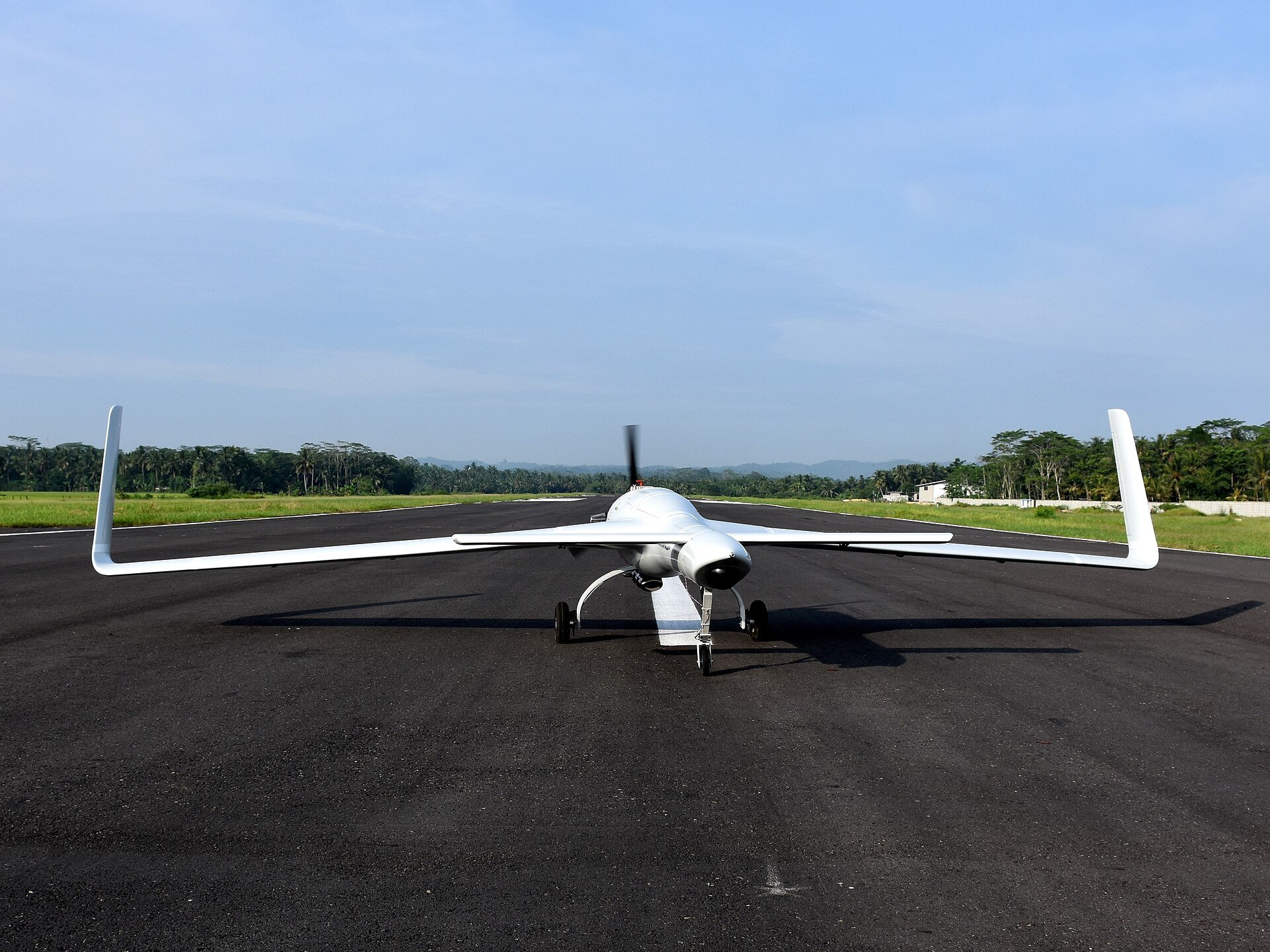
Robot Aviation is a Norwegian manufacturer of unmanned aerial systems, established in 2013 and headquartered in Eggemoen. The company designs and produces modular fixed-wing unmanned aircraft systems (UAS) intended for intelligence, surveillance, and reconnaissance (ISR) missions, as well as target-drone roles. Its product portfolio includes the Skygus and FX series of drones, which are engineered to operate in demanding environments. Robot Aviation positions itself as an engineering organization that provides complete operational capabilities, including the aircraft, ground control stations, training, and lifecycle support, rather than selling hardware alone.
The company’s primary systems are built around a modular architecture designed for single-operator control. The core platform remains constant while the mission payload is swapped out depending on operational requirements. This approach allows the same airframe to be used for diverse tasks, ranging from persistent overwatch and route reconnaissance to search and rescue operations. The systems are operated via the SkyView ground control station, which provides a unified interface for mission planning and real-time imagery across the entire product family. Robot Aviation emphasizes that its systems are interoperable with NATO STANAG 4586 standards, a requirement for integration with allied command and control networks.
Robot Aviation has secured contracts to supply its drones to various military and defense entities. The company’s systems have been deployed in active operational use, with the manufacturer citing validation in field conditions. While specific customer names are often withheld for security reasons, the company’s focus on sovereign capability and NATO interoperability suggests a strong alignment with Nordic and European defense procurement. The FX series, in particular, has been noted for its utility in target-drone scenarios, providing realistic aerial threats for live-fire training exercises. The Skygus is marketed as a tactical solution for force protection and persistent surveillance, offering long-endurance ISR capabilities to ground forces.
The company maintains its own development, production, and engineering facilities in Norway. This vertical integration allows Robot Aviation to control the quality and supply chain of its systems, a factor that has become increasingly important for defense contractors operating in Europe. The firm employs a small, specialized team of engineers and technicians who handle the design, manufacturing, and support of the drones. Robot Aviation also engages in research and development, collaborating with selected partners to advance its technology. The company’s website indicates a commitment to continuous development, ensuring that its systems evolve to meet changing operational needs.
Robot Aviation’s strategic position is defined by its focus on reliability and modularity in the face of modern warfare challenges. As drone warfare has become central to conflicts in Ukraine and the Middle East, the demand for robust, easy-to-operate ISR platforms has surged. Robot Aviation’s emphasis on a single operator controlling a versatile platform addresses the manpower constraints faced by many modern militaries. The company’s adherence to NATO standards further enhances its appeal to allied nations seeking to standardize their unmanned systems. While the company does not publicly disclose detailed financial figures or employee counts, its continued production and active deployment of systems indicate a stable operational status. The firm’s Norwegian origin provides a degree of political and supply-chain security for customers wary of dependencies on non-aligned nations. Robot Aviation continues to expand its capabilities, aiming to provide decisive information to operators in high-stakes environments.
Products
Drones
FX-20
Compact fixed-wing UAV in Robot Aviation's FX series for short- to medium-range tactical surveillance.
SkyRobot FX-Y
Six-rotor VTOL UAS for military ISR and target acquisition, integrable with armoured vehicles and boats.
Introduced 2019
SkyRobot FX10
Backpackable hand-launched fixed-wing UAS for day/night ISR and threat detection in tactical field conditions.
Introduced 2013
SkyRobot FX10NG
VTOL fixed-wing hybrid UAS with encrypted dual data-link, EO/IR gimbal, and autonomous mission execution for military ISR.
Introduced 2018
FX20
Tactical fixed-wing UAV for persistent ISR, designed for austere launch conditions without a runway.
Introduced 2015
SkyRobot FX450
Long-endurance tactical fixed-wing UAS with 20+ hour persistence and 2,500 km range for land and maritime surveillance.
Introduced 2016
Skygus
Fixed-wing UAV marketed by Robot Aviation for ISR and as an aerial target / decoy platform.