Optics11
Amsterdam fibre-optic sensing firm whose passive towed arrays and seabed curtains give the Dutch navy anti-submarine warfare in a shipping container.
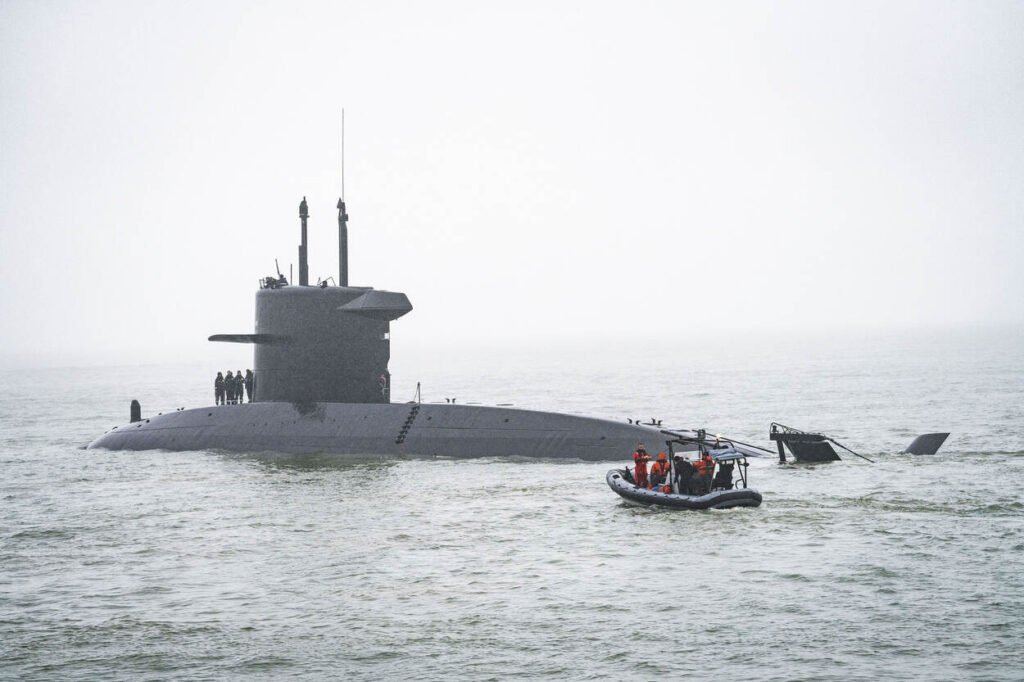
Optics11 is an Amsterdam company that listens to the sea with glass. Founded in 2011 as a spin-out from the Vrije Universiteit Amsterdam, it builds passive fibre-optic acoustic sensors, and over the past few years that laboratory technology has become a piece of NATO’s anti-submarine problem.
The distinction that matters is passive versus electrical. A conventional towed array is a cable of electrical hydrophones, which means it generates electrical noise, is vulnerable to electromagnetic interference, and needs power down its length. Optics11’s OptiArray senses sound through optical fibre instead. It draws no electrical power at the sensing end, emits no electrical noise, and is immune to electromagnetic interference — so it stays acoustically silent while listening, which is the whole game when the thing you are hunting is also listening for you. The array is thin-line and low-drag, and the company says it captures richer acoustic detail, allowing earlier detection and more confident classification of what has been heard.
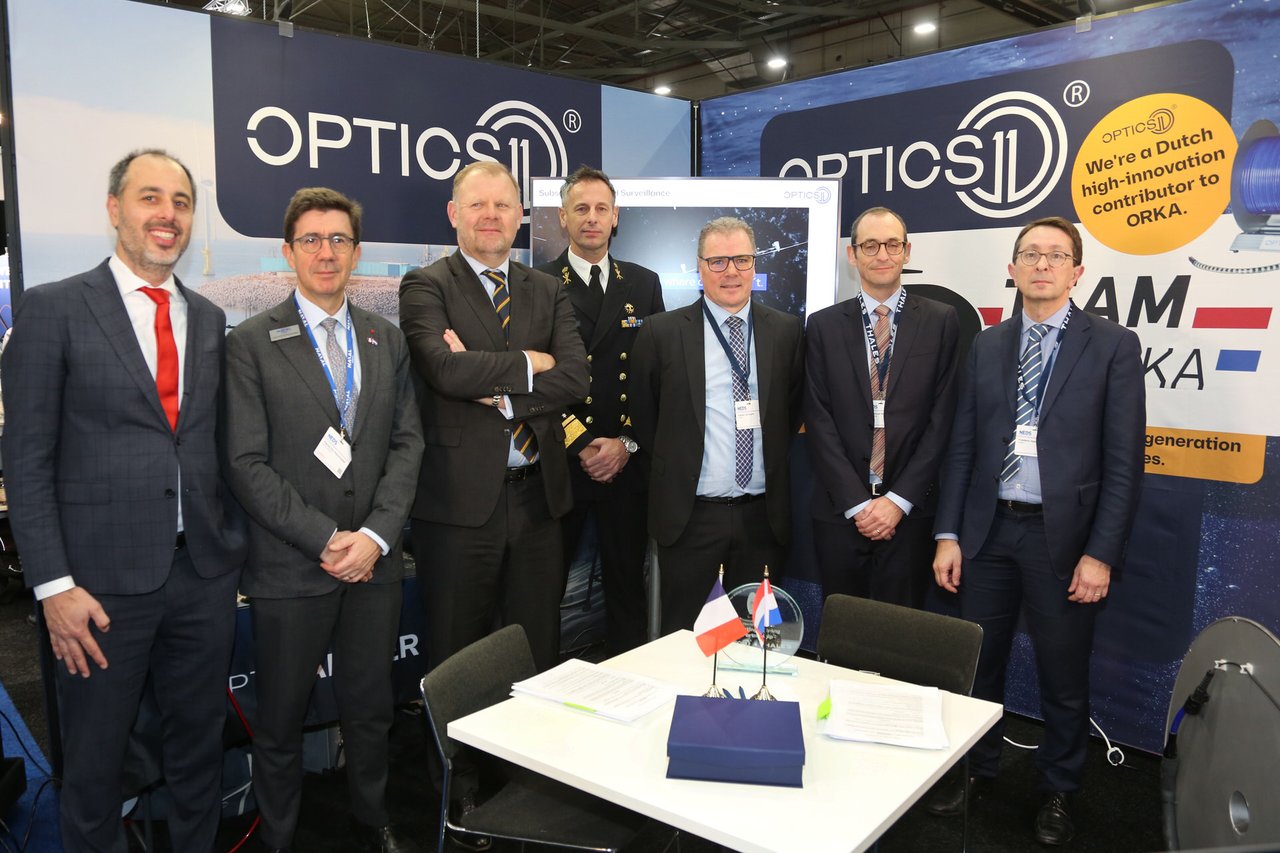
The commercially interesting consequence is that it can go on almost anything. A traditional towed array implies a specialist anti-submarine frigate with the crew and fit to match. In July 2026 the Dutch Ministry of Defence contracted Optics11 to build a containerised OptiArray under the Royal Netherlands Navy’s Anti-Submarine Warfare In A Box programme, known as ASWINABO. The idea is to put underwater surveillance on surface ships, uncrewed surface vessels and what the navy calls vessels of opportunity — a container, a winch and a cable, rather than a purpose-built hull. Paul Heiden, the company’s chief executive, framed the point bluntly: containerising the array makes detection faster, more flexible and cheaper. Captain Lucas Leppink of the Royal Netherlands Navy described the aim as equipping surface ships with underwater surveillance capability.
This matters beyond submarine hunting. The second product, OptiBarrier, is a modular fibre-optic seabed curtain that forms a persistent early-warning grid, aimed at ports, offshore wind farms and subsea cables. Damage to undersea cables and pipelines in the Baltic and the North Sea has turned seabed infrastructure into a security question, and a passive listening grid is one of the few answers that scales across hundreds of kilometres without a ship on station.
Optics11 works with Thales on Dutch submarine fits, and lists Airbus, TNO, NLR, Fugro, Boskalis, MacArtney and EvoLogics among its partners. The company appears in Russian-language coverage of European rearmament alongside Destinus, usually in the context of Dutch defence industry supplying Western naval and drone programmes.
- Stack
- fibre-optic-sensing
- passive-acoustics
- signal-processing
- Collaboration
- dual-use
- nato-supplier
- open-to-partners
- NL link
- nl-procurement
Products
Hardware
OptiArray
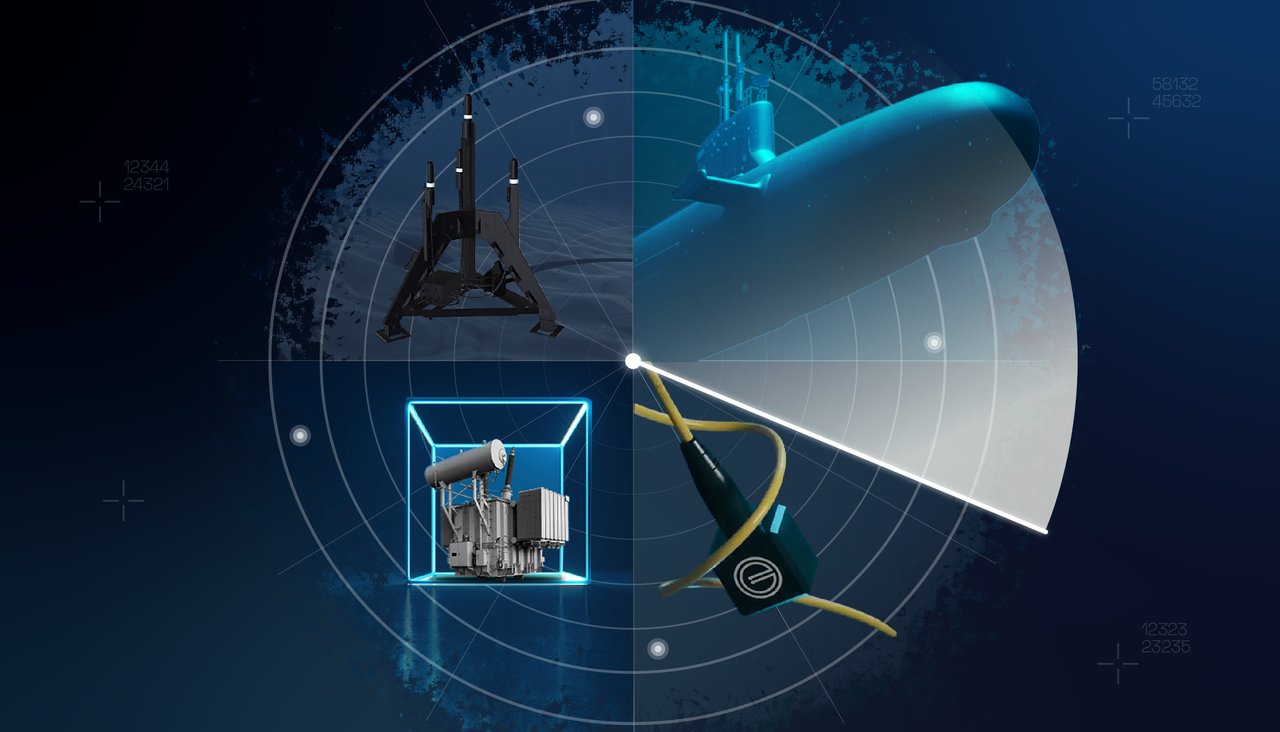
Thin-line, low-drag all-optical towed array that brings passive anti-submarine sensing to submarines, surface ships, uncrewed vessels and containerised fits.
OptiBarrier
Modular fibre-optic seabed curtain forming a persistent early-warning grid over ports, offshore wind farms and subsea cables.
Gallery
Sources
- www.navalnews.com/naval-news/2026/07/dutch-mod-selects-optics11-for-new-asw-in-a-box-capability/ (2026-09-11) — Reports the Dutch MoD selecting Optics11 for the containerised OptiArray under ASWINABO, explains the passive fibre-optic advantage over electrical towed arrays, and carries the Paul Heiden and Captain Lucas Leppink quotes.
- optics11.com/defence/ (2026-09-11) — Company defence page — OptiArray described as a thin-line, low-drag all-optical towed array and OptiBarrier as a modular fibre-optic seabed curtain; partner logos include Thales, Airbus, TNO, NLR, Fugro, Boskalis, MacArtney and EvoLogics.
- www.janes.com/defence-intelligence-insights/defence-news/defence/netherlands-selects-optics11-to-deliver-asw-in-a-box (2026-09-11) — Janes coverage of the Netherlands selecting Optics11 for the ASW-in-a-box capability.
- optics11.com/defence/thales-and-optics11-equip-dutch-submarines/ (2026-09-11) — Company account of the Thales partnership equipping Dutch submarines.
- www.navaltoday.com/2026/07/27/optics11-lands-dutch-mod-contract-for-containerized-towed-array-system (2026-09-11) — Naval Today report on the Dutch MoD contract for the containerised towed array.