
NPO Mashinostroyeniya
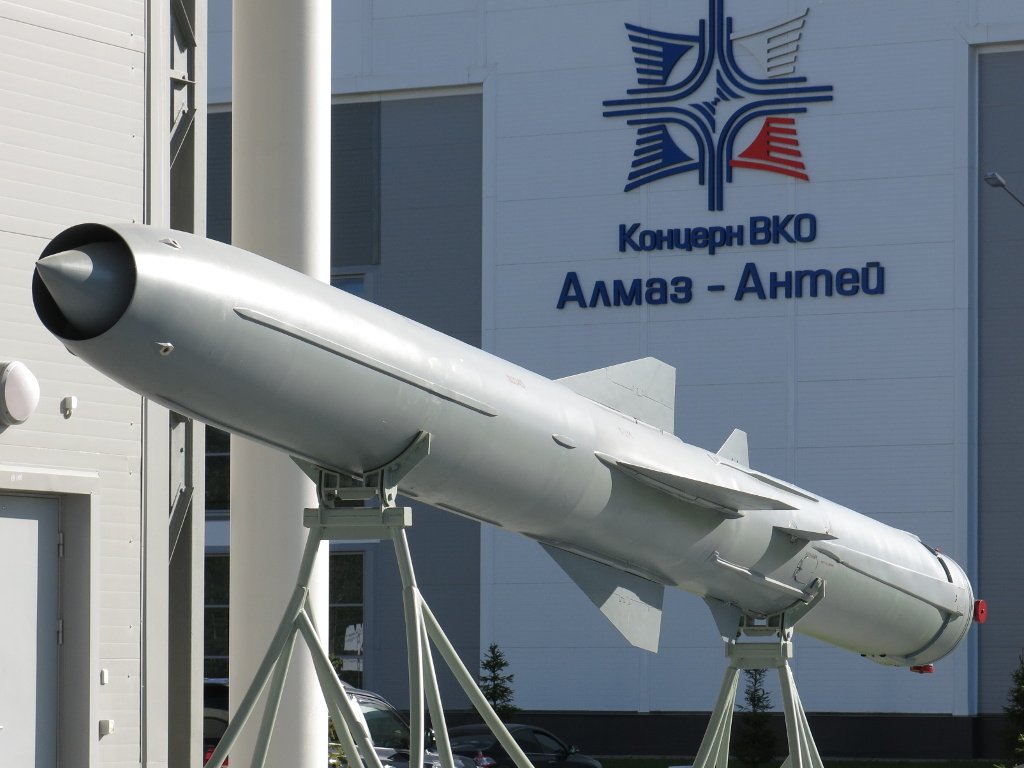
NPO Mashinostroyeniya is a Soviet-era rocket and missile design bureau based in Reutov, a town just east of Moscow. Founded in 1944, it rose to prominence under the cruise missile designer Vladimir Chelomey, who ran it through the Cold War decades and made it one of the two great rivals of Sergei Korolev’s OKB-1 in the Soviet strategic weapons and space programmes. The firm went through the familiar Soviet renaming cycle — OKB-52, later TsKBM — before settling under its present name. Today it sits inside the state-owned Tactical Missiles Corporation holding, the Rostec-adjacent conglomerate that gathers most of Russia’s missile houses under one roof.
The bureau’s historical catalogue is unusually broad. It designed the UR-100N intercontinental ballistic missile, a liquid-fuelled silo-based ICBM that remains in service, and the Almaz military space station programme, the Soviet counterweight to the US Manned Orbiting Laboratory. On the naval side it produced the P-70 Ametist submarine-launched anti-ship missile and later the P-800 Oniks, a ramjet-powered supersonic sea-skimmer that became the technical basis for one of its most visible modern projects.
That project is BrahMos, the joint venture with India’s DRDO. BrahMos adapts the Oniks airframe for Indian ships, aircraft and ground launchers, and India is, by the company’s own accounting, Mashinostroyeniya’s second-largest customer after the Russian defence ministry. A hypersonic successor, BrahMos-II, has been in announced development for years, though public details remain thin and timelines have repeatedly slipped. The bureau is also credited by Russian state media as the lead designer of the 3M22 Zircon hypersonic anti-ship cruise missile, test-fired from frigates of the Northern Fleet, and of the Avangard hypersonic glide vehicle mated to retired UR-100N boosters — claims about range and manoeuvrability that come almost exclusively from the Russian Ministry of Defence and should be read as such.
At its mid-1980s peak the firm employed close to 10,000 people. Soviet collapse hit it hard: by 1993 defence orders had dropped to roughly a fifth of their previous level, and the bureau was tasked by the government with developing vegetable-oil processing lines and bakery equipment to keep its workforce occupied. Published figures remain patchy; Wikipedia carries a 2014 revenue figure of $464 million, and the firm does not disclose current headcount.
The company has been under Western sanctions for more than a decade. On 16 July 2014 the Obama administration added NPO Mashinostroyeniya to the US Treasury’s Specially Designated Nationals list in response to Russia’s actions in Ukraine, and successive rounds since February 2022 have tightened those restrictions across the EU and allied jurisdictions. Reporting by The Washington Post and others in 2023, based on leaked internal documents, described a sustained Chinese state-linked intrusion into the bureau’s networks over several years — an episode that, if accurate, underlines how closely watched its hypersonic and cruise-missile work has become.
Products
Missiles & loitering munitions
P-800 Oniks
Supersonic ramjet anti-ship missile, fired from Bastion coastal launchers in Crimea at Odesa, Kyiv and other Ukrainian land targets.
Introduced 2002 · Updated 2026
3M22 Zircon
Russia's ship-launched "hypersonic" anti-ship missile, now fired from Bastion launchers at Kyiv. Debris points to a quasi-ballistic solid-fuel design.
Introduced 2023 · Updated 2026