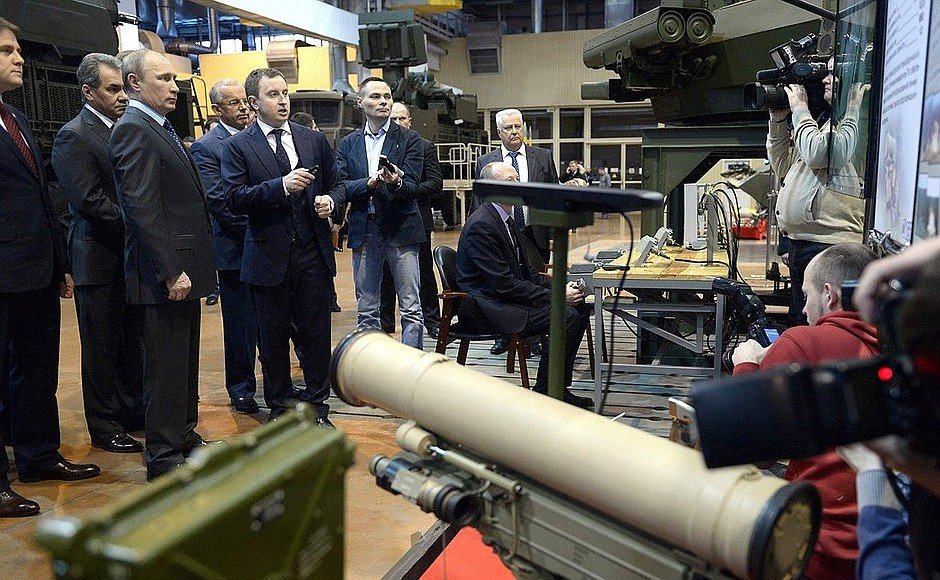
KBP Instrument Design Bureau
KBP Instrument Design Bureau was founded in Tula in 1927 by Pavel Petrovich Tretyakov as a Soviet state design office for small arms and precision weapons, and nearly a century later it remains headquartered in the same city. The bureau is run day-to-day by managing director D. Konoplev, with N. Khokhlov as chief engineer and first deputy general director. KBP sits inside High Precision Systems, the precision-weapons holding of Russian state conglomerate Rostec, and employed around 8,600 people as of 2015. Its stated operating income the same year was roughly ₽14 billion.
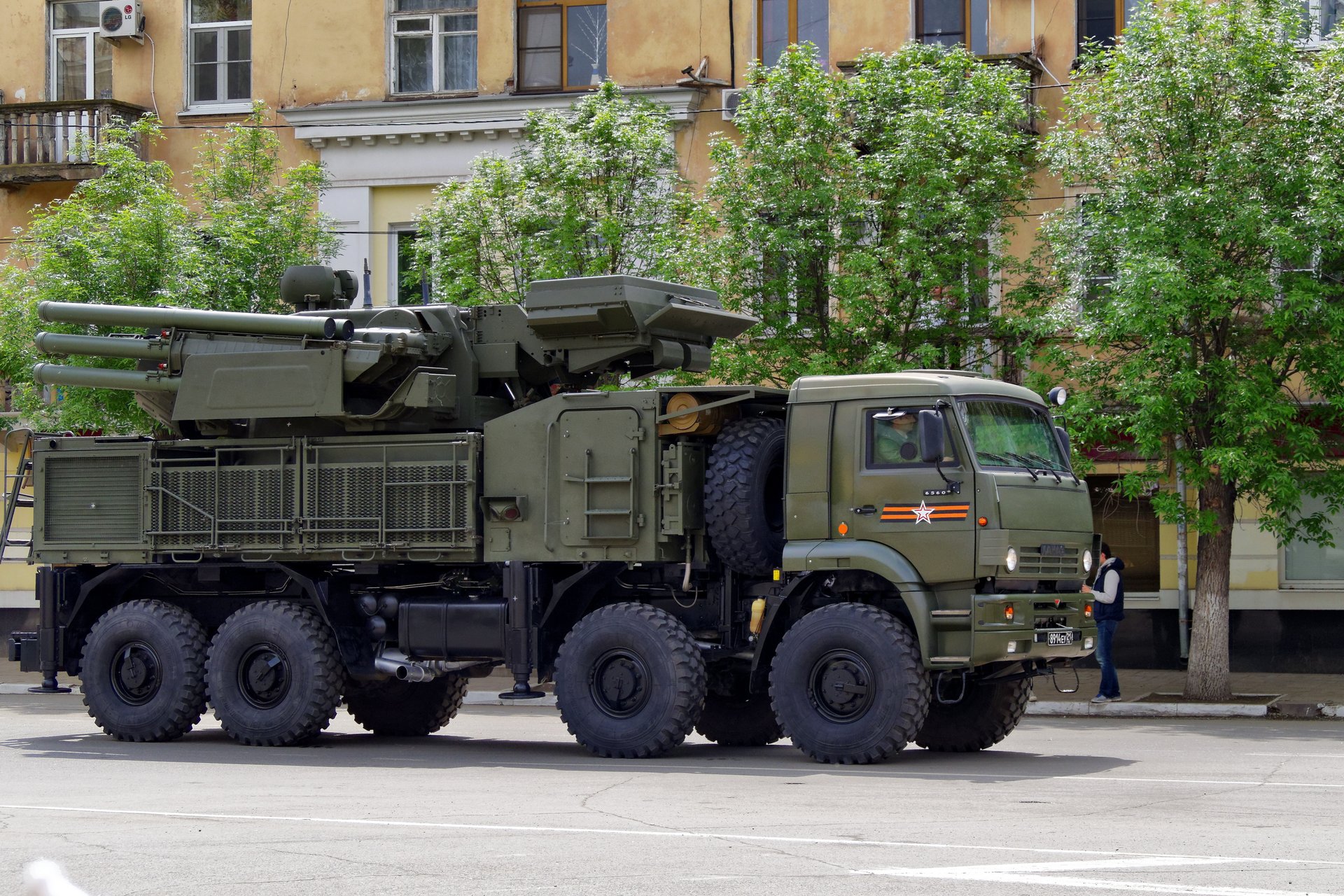
The bureau’s product line spans most of what a modern land force fires. KBP is the designer of the Kornet anti-tank guided missile and its predecessor the Metis, the Krasnopol laser-guided artillery shell, the AGS-30 automatic grenade launcher, and the 2A42 and 2A72 30 mm autocannons carried by Russian infantry fighting vehicles. On the air-defence side it designed the Pantsir-S1 short-range gun-and-missile system and the Tunguska, both still in frontline Russian service. The bureau also develops close-in weapon systems and sporting firearms through the same Tula engineering base.
Those systems have travelled widely. The Pantsir-S1 has been exported to Syria, the United Arab Emirates, Algeria and other states, and has been photographed repeatedly on Russian territory and in Ukraine. The Kornet has arguably had the longest reach: it is in the arsenals of a long list of Middle Eastern militaries, has been reported fielded by Hezbollah against Israeli armour, and is in heavy use on both sides of the Russian–Ukrainian war via captured and licensed stocks. Krasnopol-guided artillery rounds have been widely used by Russian forces in Ukraine, with Ukrainian artillery crews later cited as adopting the technique with their own guided munitions.
KBP has been under Western sanctions since Russia’s annexation of Crimea. The US Treasury listed the bureau under Executive Order 13662 — the Ukraine-related sectoral programme — alongside its parent High Precision Systems and Rostec itself, and the entity remains on the OFAC consolidated list under the identifier Konstruktorskoe Byuro Priborostroeniya. The European Union, the United Kingdom and Ukraine’s own sanctions register carry equivalent designations, citing the firm’s role as a Russian state arms maker. Those measures have cut off most legal access to Western electronics and precision machine tools, though independent reporting on Russian defence procurement has repeatedly documented parallel-import routes keeping Rostec plants supplied.
The bureau’s distinctive position is less about any single product than about range: inside the Russian defence industry, KBP is one of a very small number of houses that designs anti-tank, anti-aircraft and precision-artillery systems under one roof, and the only one that does so from the historic Tula arms complex. That continuity — nearly a century in the same city, through four changes of political system — is the firm it still is.
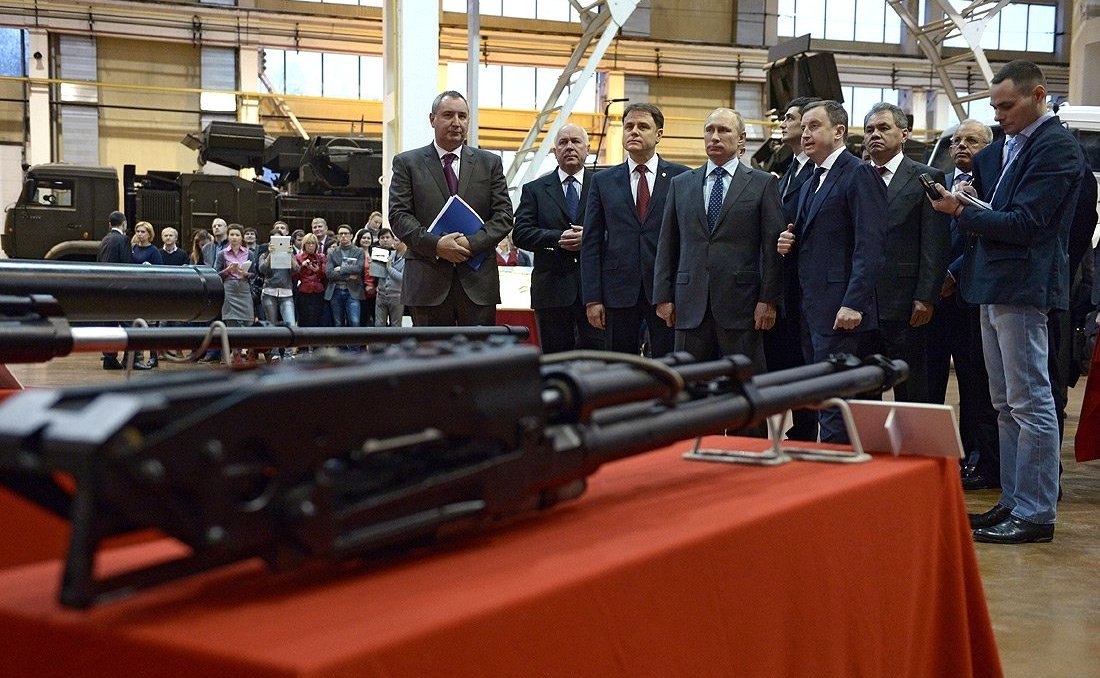
Products
Integrated systems
2A42