
Destinus
Swiss aerospace-defence company that pivoted from hypersonic aircraft to mass-producible interceptors and cruise/strike drones for European air defence — the Hornet, Kryla, Ruta and Vorexon lines.
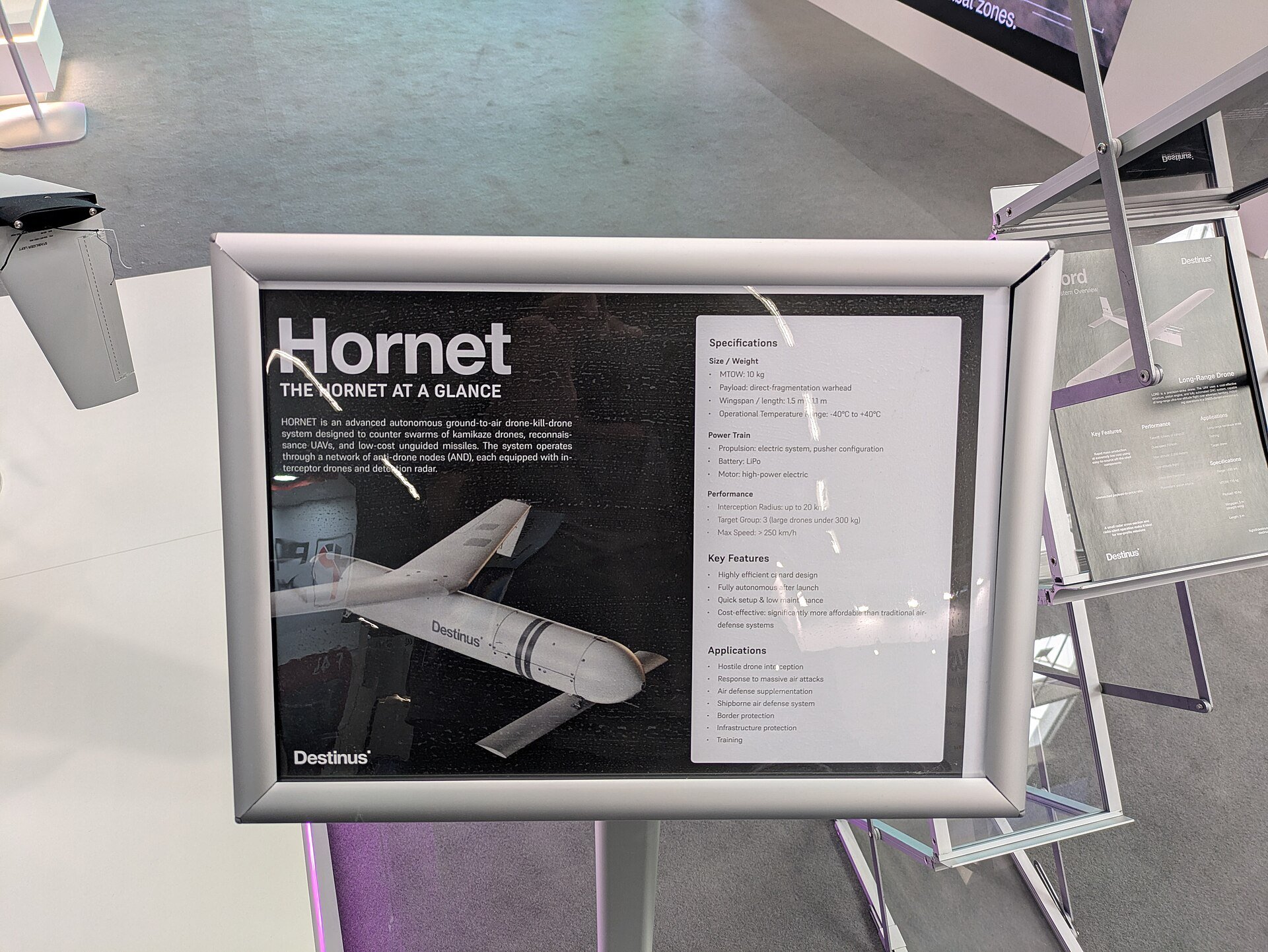
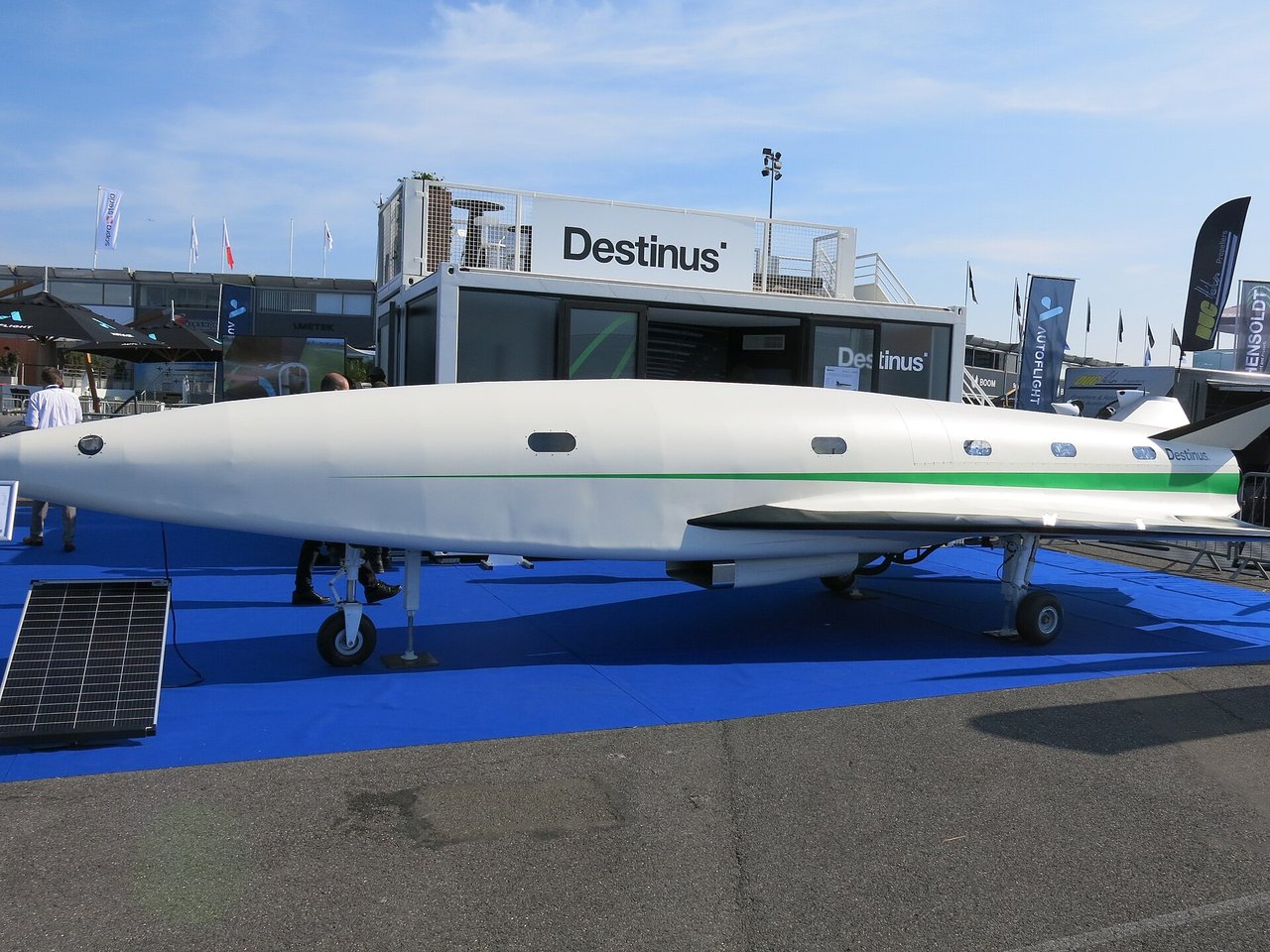
Destinus is a European aerospace-defence company founded in 2021 and headquartered in Payerne, Switzerland. It began with an ambitious civil goal — hydrogen-powered supersonic and hypersonic aircraft — and has since redirected much of its engineering toward something the war in Ukraine made urgent: cheap, mass-producible air-defence and strike drones that a European industrial base can turn out at volume.
Its current catalogue is organised into named families offered in successive “Blocks.” The Hornet line is a canister-launched interceptor and precision-strike system; Kryla is a “saturation cruise” concept built around distributed, high-volume cruise drones; Ruta is a loitering/cruise munition sold in baseline, extended-range and long-range deep-strike variants; and Vorexon is a previewed high-speed point-defence interceptor concept. The recurring theme across all of them is affordability and throughput — the company frames its pitch as “defence at industrial tempo,” aimed at the interceptor-versus-Shahed cost problem that has dominated European air-defence debate.
In July 2026 Destinus announced a strategic partnership with Thales to jointly advance counter-UAS, long-range strike and integrated air-defence solutions — a signal that its systems are moving from prototypes toward the established European defence supply chain.
The Dutch connection
Destinus is a Swiss company, not a Dutch one — a distinction worth making, because Russian channels tracking European rearmament have taken to describing it as Dutch. The confusion is understandable, because the company’s centre of gravity in this product line really is in the Netherlands.
Ruta Block 1 is in serial production there, and on 24 August 2026 the Royal Netherlands Navy selected Destinus to develop a kinetic counter-drone capability for its surface fleet based on the Hornet B2. The programme covers delivery of the interceptors, integration aboard several warships and work towards an initial operating capability, with completion slated for the second quarter of 2027. It is the first naval application of the Hornet line.
The technical argument is the one running through the whole counter-drone debate. Hornet B2 has a range beyond 150 km and carries a 3 kg payload, with electro-optical and infrared sensing plus an optional radar seeker, and onboard processing that handles the terminal engagement. The target set is one-way attack drones, loitering munitions and helicopters, and the pitch is cost per engagement: shooting down a cheap attack drone with a multi-million-euro surface-to-air missile is a trade that fails on arithmetic long before it fails on capability. Warships are especially exposed to that problem, carrying deep magazines of expensive interceptors and no cheap option between them and a close-in gun.
Destinus is also working with Rheinmetall to accelerate Ruta Block 3, the long-range deep-strike variant, and to scale European production of the family. Mikhail Kokorich, who founded the company in 2021, remains chief executive.
Products
Missiles & loitering munitions
Hornet Block 2
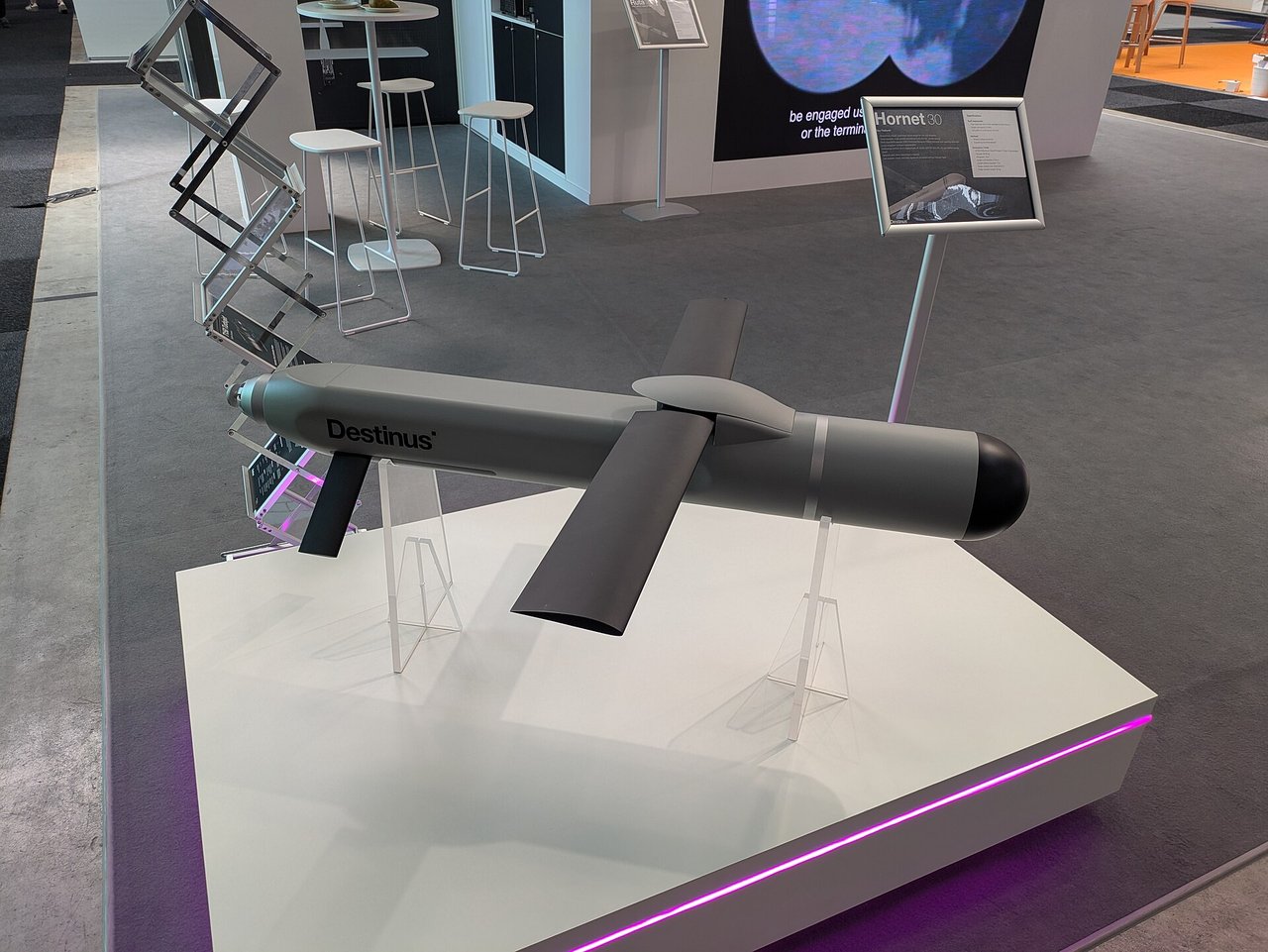
Canister-launched, dual-role loitering system — a subsonic-threat interceptor (anti-Shahed) that also performs precision strike against ground and maritime targets, with EO/IR and radar guidance for GPS-denied engagement.
Hornet Block 1
The operational baseline of the Hornet line — a subsonic threat interceptor system.
Kryla
A "saturation cruise" system — distributed, high-volume cruise/strike drones for mass deployment.
Ruta
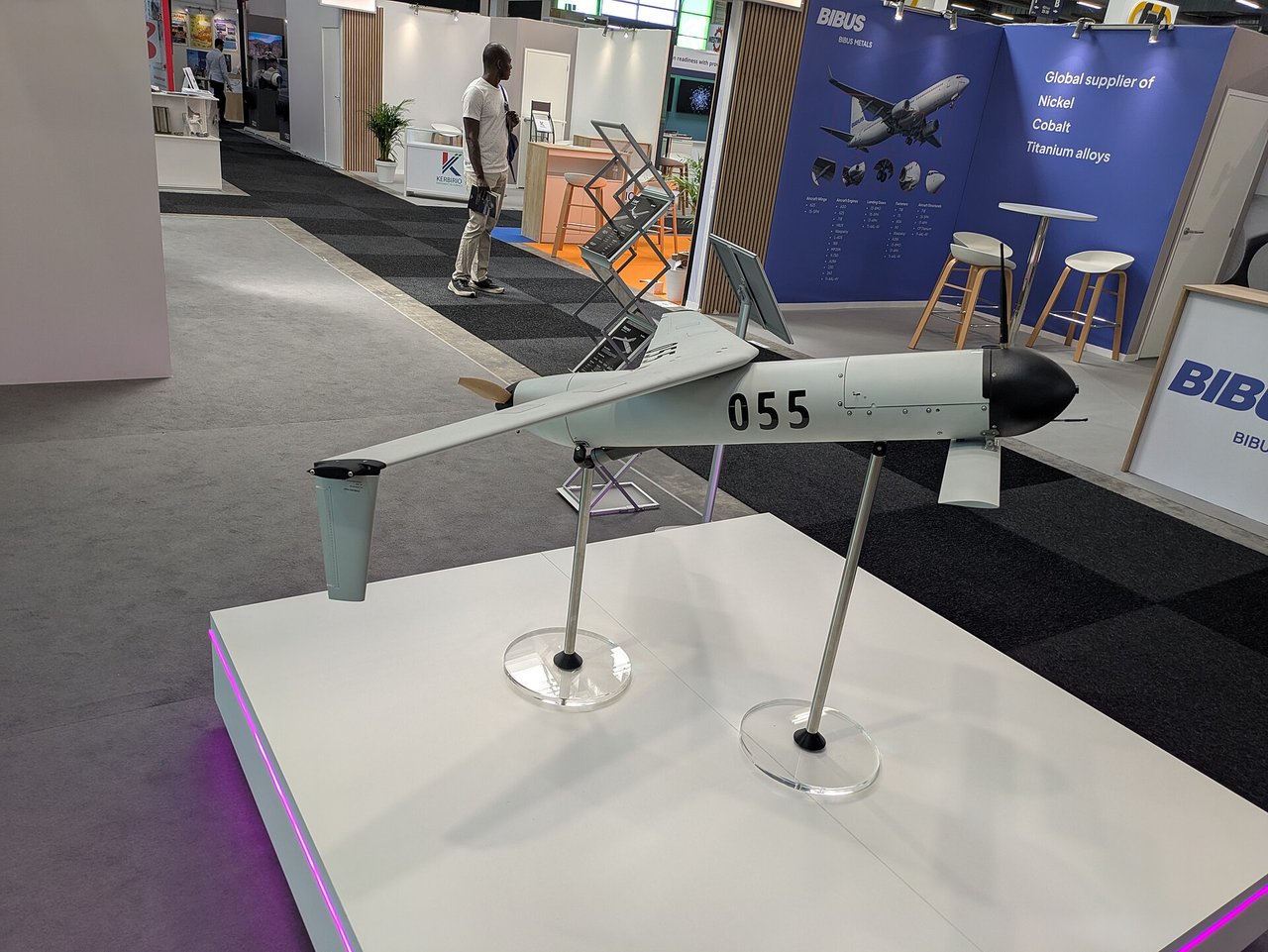
A loitering / cruise munition offered in Block 1 (baseline), Block 2 (extended range) and Block 3 (long-range deep strike) variants.
Vorexon
A previewed high-speed point-defence interceptor concept.
Hornet Block 2
Destinus's canister-launched, dual-role loitering system — a subsonic-threat interceptor (anti-Shahed) that also strikes ground and maritime targets, using EO/IR and radar guidance to engage in GPS-denied conditions.
Updated 2026
Gallery
Sources
- www.destinus.com/ (2026-07-27) — Destinus official site — product families (Kryla, Ruta, Hornet Block 1/2, Vorexon), "defence at industrial tempo" positioning, and the July 2026 news items.
- en.wikipedia.org/wiki/Destinus (2026-07-27) — Wikipedia — "Destinus Group BV is a private European aerospace company... founded in 2021 in Payerne, Switzerland," focused on supersonic/hypersonic aviation, hydrogen and dual-use technologies.
- www.destinus.com/news (2026-07-27) — Destinus News (2026-07-20) — "Thales and Destinus enter strategic partnership with a view to advance counter-UAS, long-range strike and integrated air defence solutions"; Vorexon high-speed point-defence interceptor concept previewed.
- www.navalnews.com/naval-news/2026/08/destinus-hornet-b2-naval-cuas-netherlands-navy/ (2026-09-11) — Reports the Royal Netherlands Navy selecting Destinus on 24 August 2026 to develop a kinetic counter-UAS capability from the Hornet B2, covering interceptor delivery, integration aboard several warships and work towards initial operating capability, completing in Q2 2027.
- www.defensenews.com/global/europe/2026/08/25/dutch-navy-to-equip-fleet-with-destinus-c-uas-interceptor-drones/ (2026-09-11) — Gives the Hornet B2's 150 km-plus range, 3 kg payload, EO/IR and optional radar seeker, the cost-per-engagement argument, and that Ruta Block 1 is in serial production in the Netherlands.
- www.destinus.com/post/destinus-accelerates-ruta-block-3-development-program-with-rheinmetall-to-scale-european-long-range-strike-production (2026-09-11) — Destinus' own announcement of the Rheinmetall collaboration on Ruta Block 3 and European long-range strike production scale-up.
- en.wikipedia.org/wiki/Destinus_RUTA (2026-09-11) — Encyclopedic entry on the RUTA family and its variants.