Axon Vision
Military-grade edge-AI for situational awareness, automatic target recognition, and counter-drone defence across land, air, and sea platforms.
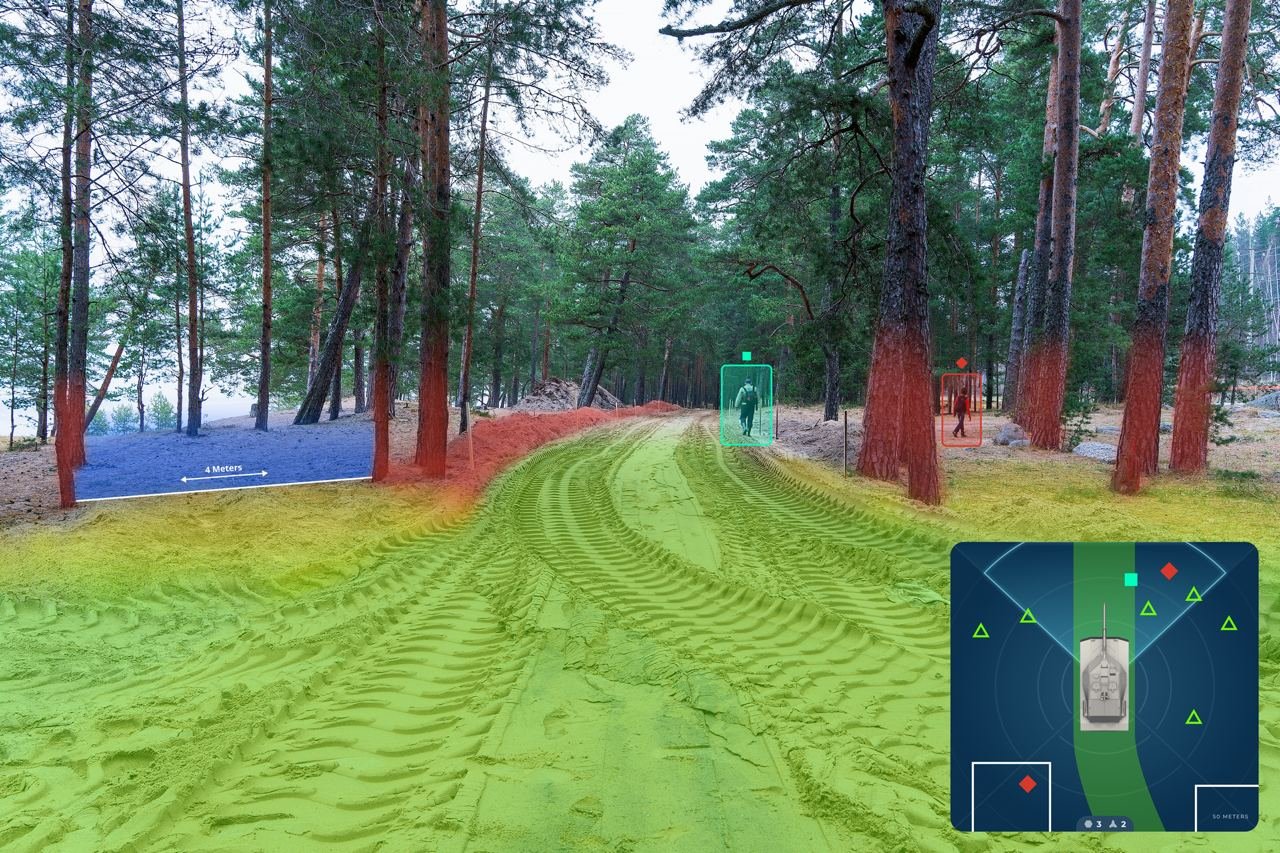
Axon Vision is an Israeli defense technology company founded in 2017 and headquartered in Tel Aviv. The firm operates at the intersection of artificial intelligence and military hardware, focusing on edge computing solutions that allow weapon systems and platforms to process sensor data locally rather than relying on cloud connectivity. Neri Zin serves as the chief executive officer, guiding the company’s strategy to integrate machine learning into tactical environments where latency and bandwidth are critical constraints. The company positions itself as a provider of military-grade edge AI designed for situational awareness, automatic target recognition, and counter-drone defense across land, air, and sea platforms.
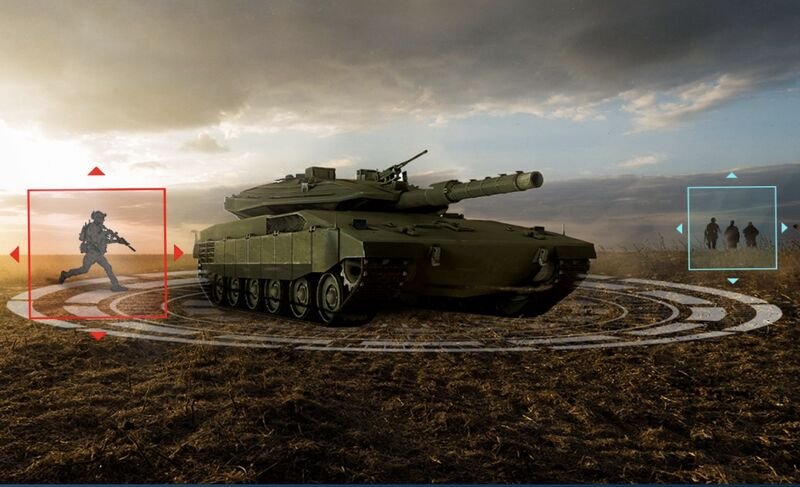
The company’s product portfolio is anchored by its Edge AI architecture, which transforms raw sensor inputs into actionable battlefield decisions. A primary offering is Edge SA, a persistent battlefield awareness system that provides continuous detection and real-time crew alerts for both ground and aerial threats. This software fuses data from electro-optical, thermal, radar, radio frequency, and acoustic sensors to create a unified operational picture. It is designed to automatically detect, classify, track, and prioritize a wide array of targets, including personnel, armored vehicles, small unmanned aerial systems (sUAS), and first-person view (FPV) drones. By handling this cognitive load, the system aims to reduce operator fatigue and accelerate the decision-making loop. Another key solution is StormArc, which specializes in aerial threat detection and counter-drone capabilities, addressing the growing prevalence of autonomous aerial attacks in modern conflicts.
Axon Vision’s technology is built to be platform-agnostic, allowing for modular integration with existing military hardware. The company emphasizes that its solutions are MIL-STD qualified, indicating they meet specific military standards for durability and performance in harsh environments. This flexibility allows original equipment manufacturers (OEMs) and integrators to deploy mission-specific capabilities across various manned and unmanned platforms without requiring a complete overhaul of the underlying systems. The company’s marketing materials highlight partnerships with defense organizations, including testimonials from Israeli military officials, suggesting its technology is being utilized within the Israel Defense Forces (IDF) ecosystem. The firm’s approach focuses on reducing the cognitive workload of operators by automating the detection and classification of threats, thereby allowing human personnel to focus on verification and engagement decisions.
As a scale-up in the defense sector, Axon Vision operates in a highly competitive market dominated by larger defense primes and specialized startups. The company’s emphasis on edge AI places it in direct competition with firms developing similar computer vision and sensor fusion technologies for autonomous and semi-autonomous weapons systems. The global demand for counter-drone solutions has intensified since the outbreak of large-scale conflicts in Ukraine and the Middle East, driving interest in technologies that can identify and track small, fast-moving aerial targets. Axon Vision’s focus on integrating these capabilities into existing platforms rather than selling standalone systems represents a strategic choice to lower barriers to adoption for military customers who are reluctant to replace legacy hardware. The company continues to refine its algorithms to improve accuracy in complex environments, aiming to maintain a competitive edge in the rapidly evolving landscape of autonomous warfare.
- Stack
- computer-vision
- edge-autonomy
Products
Software
Edge360
AI situational-awareness system for armoured vehicles; fuses camera feeds to detect and classify threats around the platform.
StormArc
Aerial-threat / counter-drone detection.
Hardware
EdgeRCWS
AI fire control unit for remote weapon stations — automates target recognition, ballistic calculation, and hit/miss correction to increase Next Generation Combat Vehicle lethality.
EdgeSight
AI-enabled military sight and stabilized gimbal camera — integrates an AI mission computer with existing BMS for real-time video analytics on deployed platforms.
EdgeUAV
Plug-and-play edge AI kit for UAVs and drones — low-power embedded GPU with proprietary deep learning to detect, track, and classify targets in real time across harsh conditions.
Gallery


Sources
- www.axon-vision.com/ (2026-05-31) — Official site; confirms the military-grade edge-AI focus and the Edge360 / EdgeRCWS / EdgeUAV / ClearSky products.
- monch.com/axon-vision-raises-26m-in-ipo-becoming-israels-first-publicly-traded-defense-ai-company/ (2026-05-31) — Reports the Aug 2024 Tel Aviv Stock Exchange IPO (~$26M), 2017 founding, and original founders.
- breakingdefense.com/2024/03/israels-axon-vision-ceo-talks-ai-in-ground-combat-in-gaza/ (2026-05-31) — Reports IDF deployment of Edge360 on Namer and Eitan armoured personnel carriers.
- www.israeldefense.co.il/en/node/67873 (2026-05-31) — Reports Neri Zin appointed CEO (succeeding Roy Riftin).