Avular
Modular industrial drone platforms and autonomy stack adopted for defence and inspection trials.
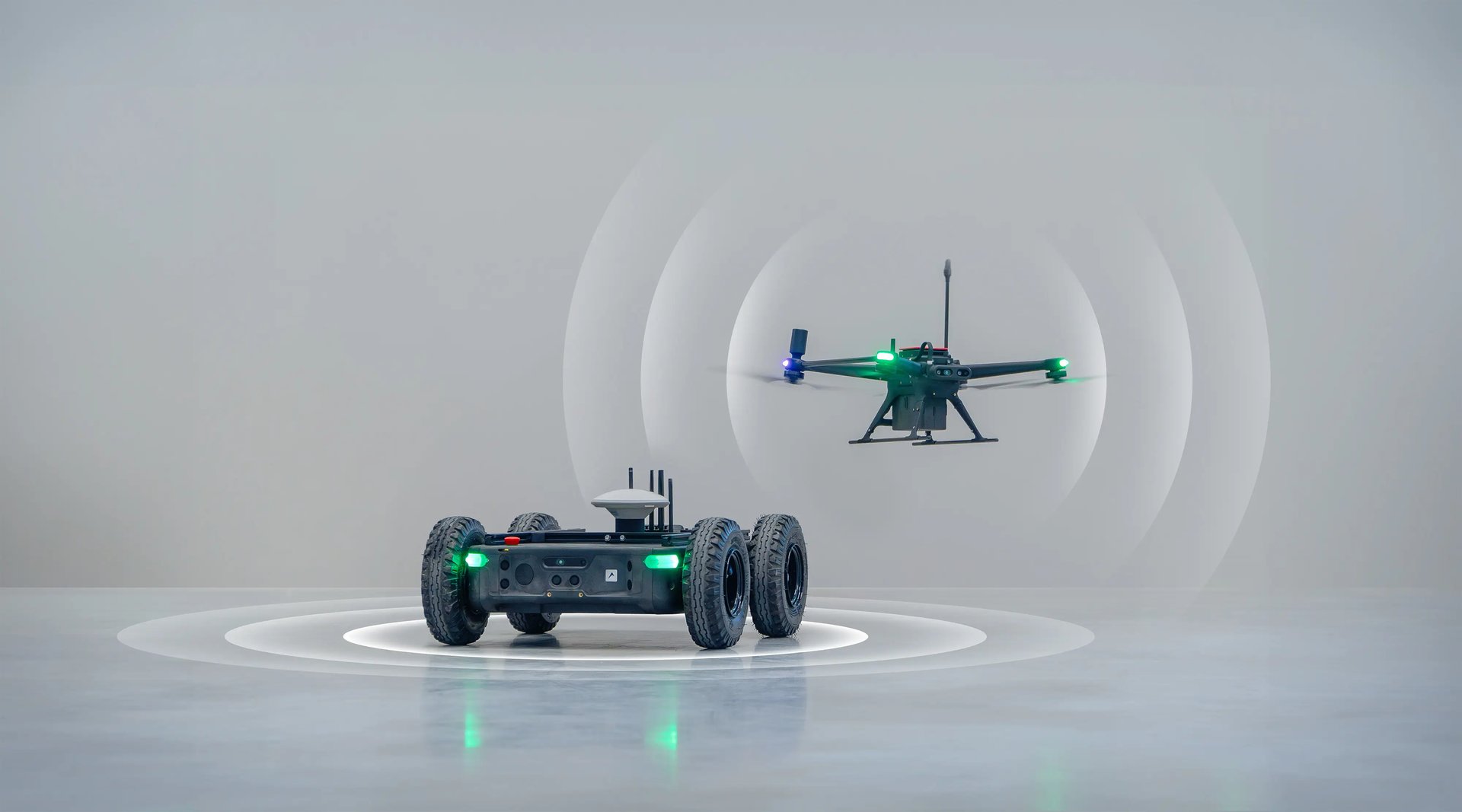
Avular is a robotics company based in Eindhoven, Netherlands, founded in 2014. The firm specializes in developing modular autonomous platforms for both aerial and ground applications, positioning its technology as a solution to labor shortages and operational inefficiencies in industrial sectors. While its primary commercial focus has been on civilian infrastructure, the company’s underlying autonomy stack and hardware architecture have attracted attention for potential dual-use applications in defense and security.
The company’s product portfolio is anchored by two main hardware platforms: the Vertex One and the Origin One. The Vertex One is a versatile drone platform designed for aerial missions, equipped with state-of-the-art sensors and onboard computing power. It is marketed as suitable for a wide range of autonomous tasks, including research and development, logistics, and first-response scenarios. The platform is supported by Avular’s proprietary Autopilot software and a Software Development Kit (SDK), which allow for customization and integration into existing operational workflows. The Origin One serves as the ground-based counterpart, providing a modular chassis for various payloads and sensors. Together, these systems form a cohesive ecosystem that emphasizes modularity, allowing users to swap components based on specific mission requirements.
Avular’s technology has been deployed in several high-profile civilian sectors, demonstrating the robustness of its autonomy stack. The company has partnered with SGL Group to provide autonomous, pesticide-free turf care solutions for golf courses and sports fields, a project highlighted by the company’s announcement in September 2026. This collaboration underscores the practical application of Avular’s precision navigation and control systems in sensitive environments. Additionally, the company has expanded into infrastructure maintenance, with its autonomous asphalt roller technology debuting at Schiphol Airport in late 2025. This deployment marks a significant milestone for European infrastructure innovation, showcasing the ability of Avular’s systems to operate in complex, high-traffic environments.
The company’s technical capabilities have also been recognized within the industry. In November 2025, Avular received the Tech Hero Award at CIODAY2025, an accolade given to companies that demonstrate digital excellence and technological innovation. This recognition highlights the company’s standing as a leader in the Dutch robotics sector. The company’s headquarters are located at Achtseweg Zuid 221 in Eindhoven, a hub for high-tech systems and materials in the Netherlands.
While Avular primarily operates in the commercial and industrial space, its modular design and advanced autonomy features place it within the broader ecosystem of dual-use technologies. The company’s emphasis on creating robots that can operate autonomously in challenging environments aligns with the growing demand for unmanned systems in defense and security applications. The Vertex One’s suitability for first responders and the Origin One’s modularity suggest potential adaptability for military or law enforcement use, although the company currently frames its value proposition around civilian efficiency and safety.
Avular’s approach to robotics is characterized by a focus on practical problem-solving rather than theoretical innovation. By addressing immediate challenges such as labor shortages and human safety risks in hazardous environments, the company has carved out a niche in the industrial automation market. Its partnerships with major entities like SGL Group and infrastructure projects like Schiphol Airport provide a real-world testing ground for its technologies, ensuring that its systems are battle-tested in civilian contexts before any potential military adoption. The company’s continued expansion into new domains, from wind turbine inspections to wildfire monitoring, indicates a strategy of broadening the applicability of its core autonomy stack.